
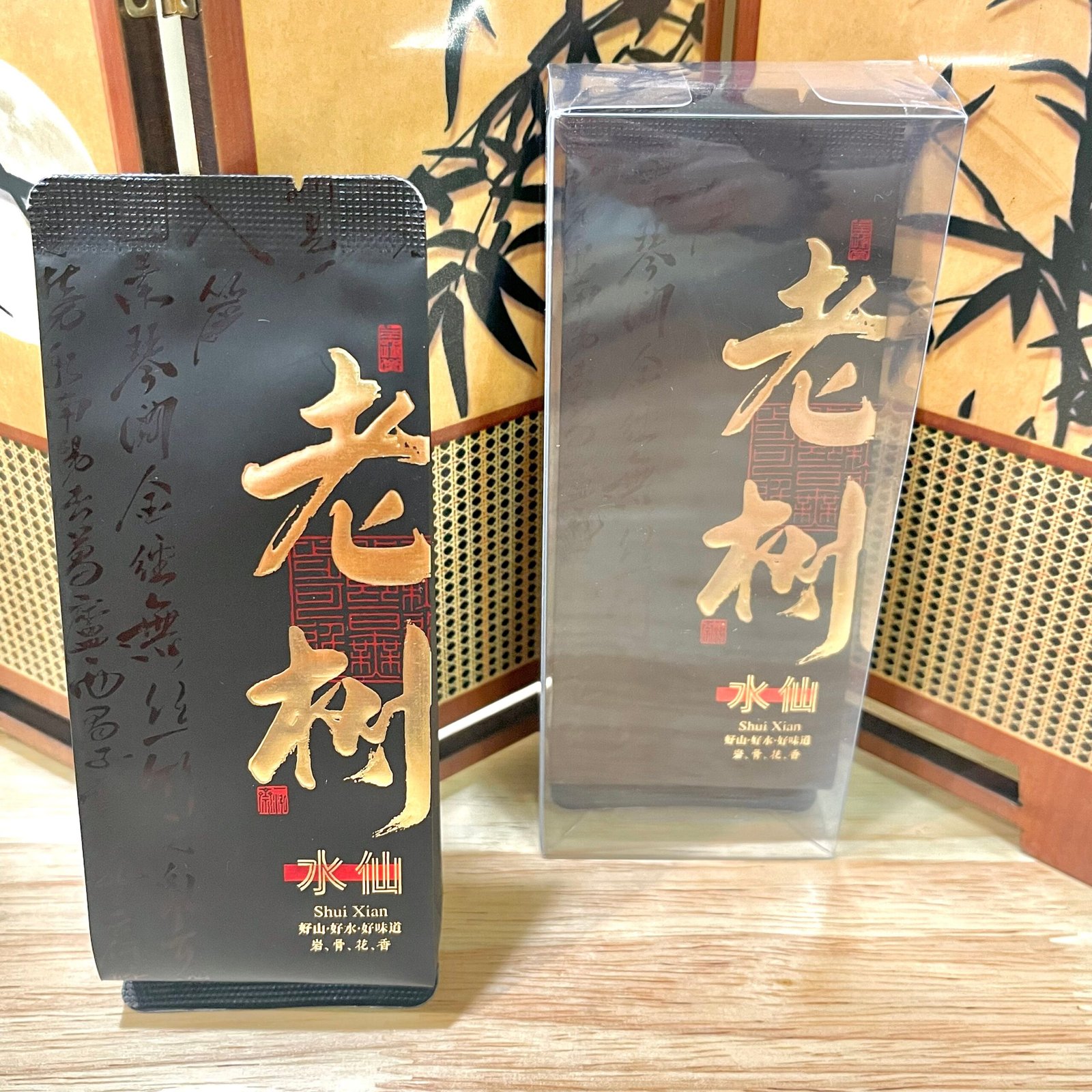
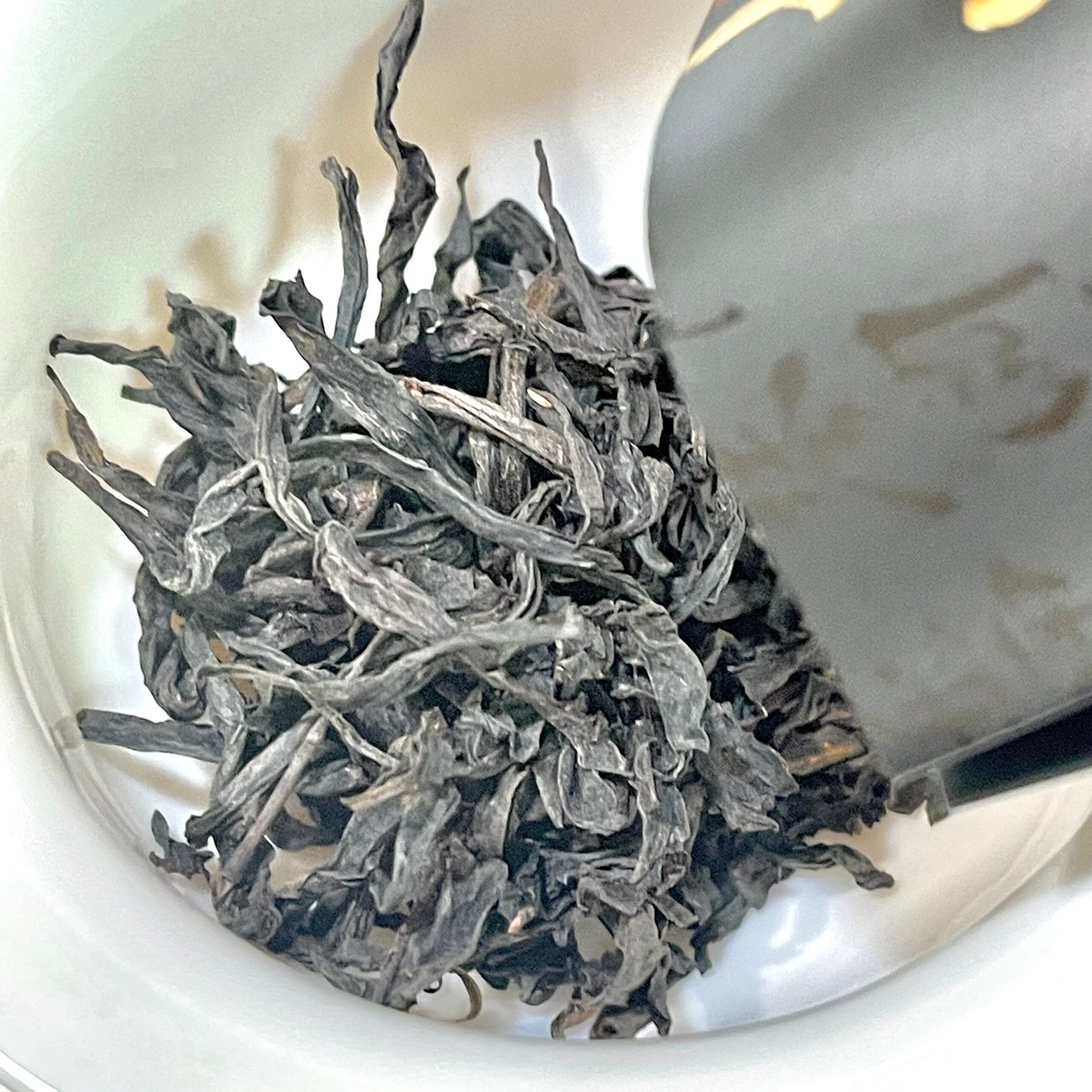
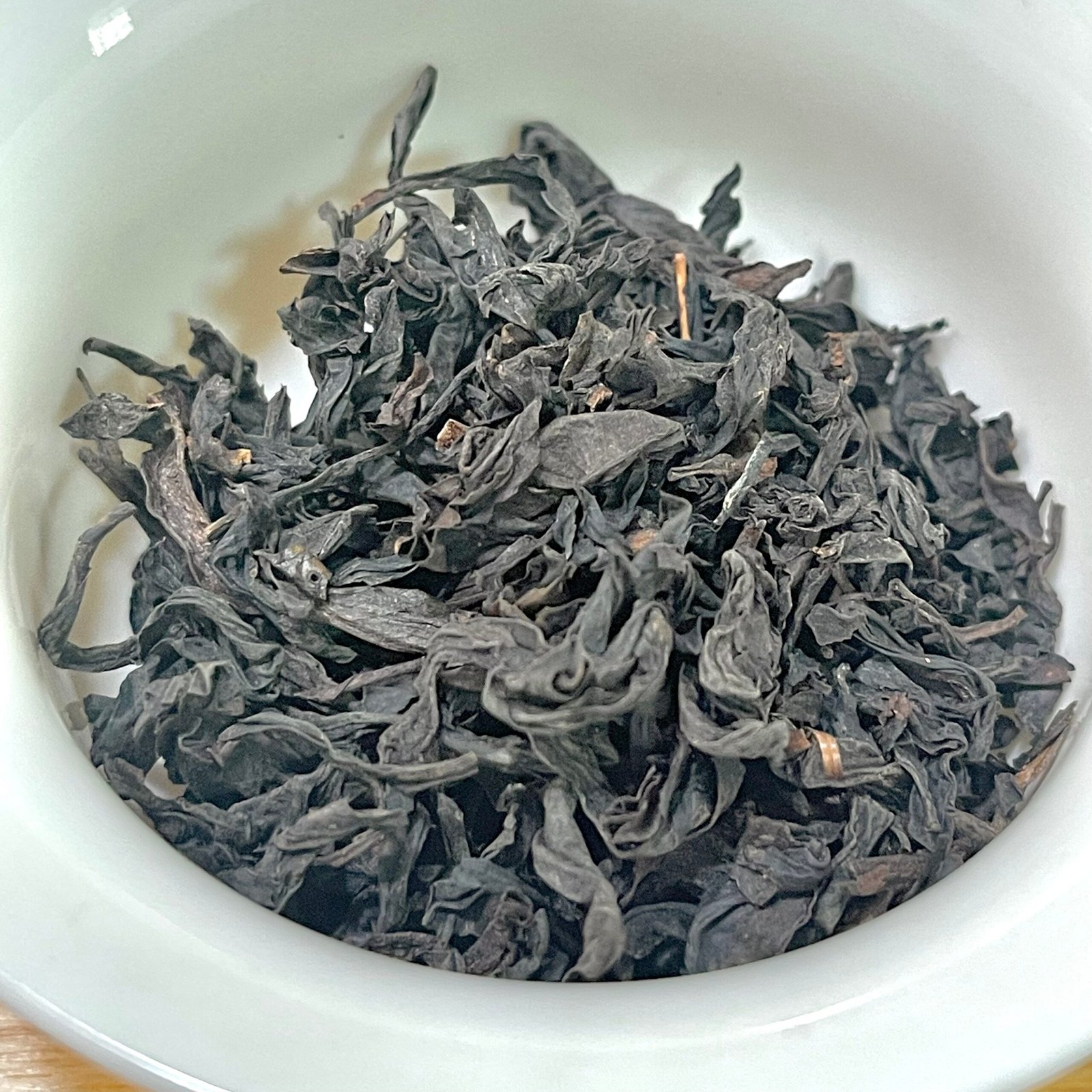
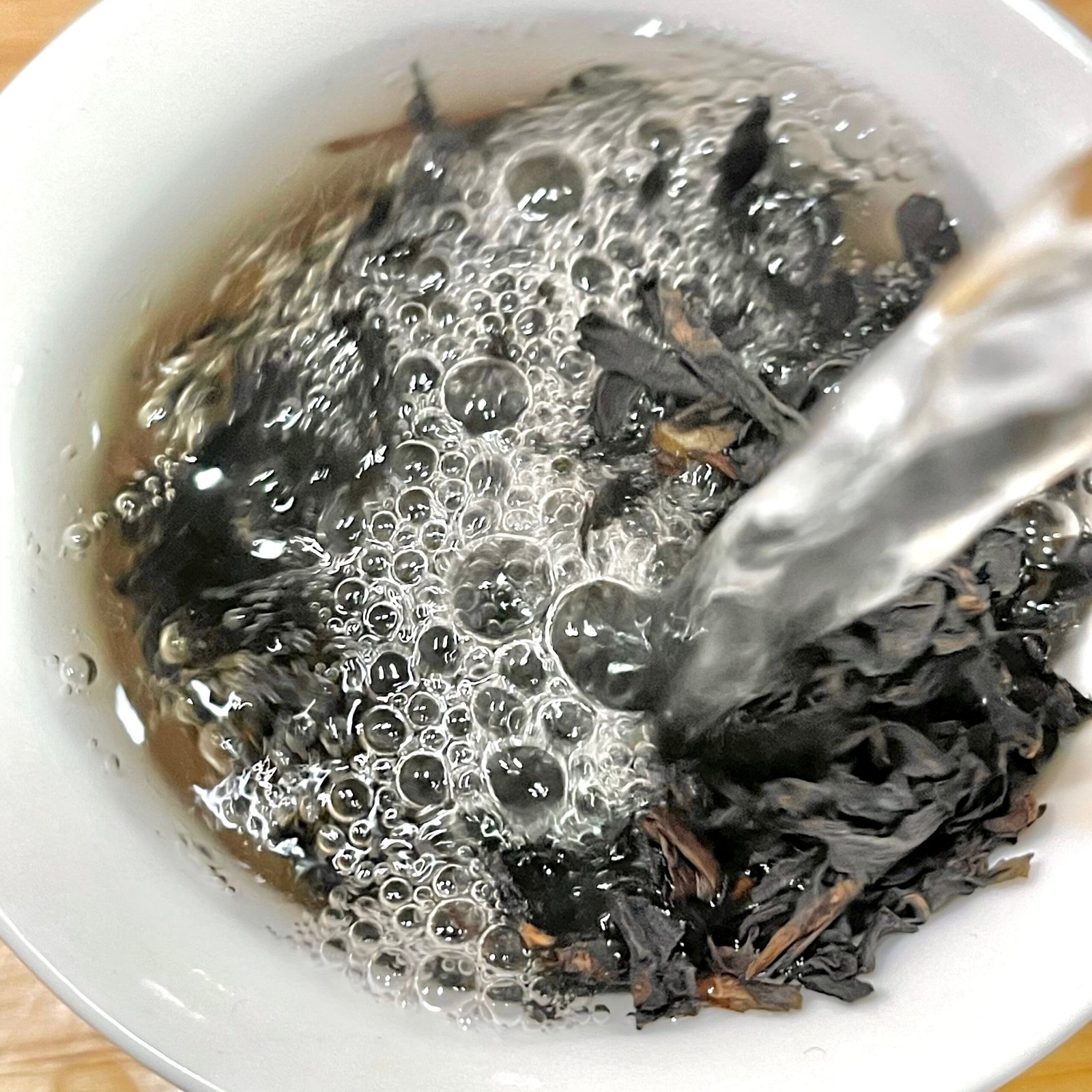
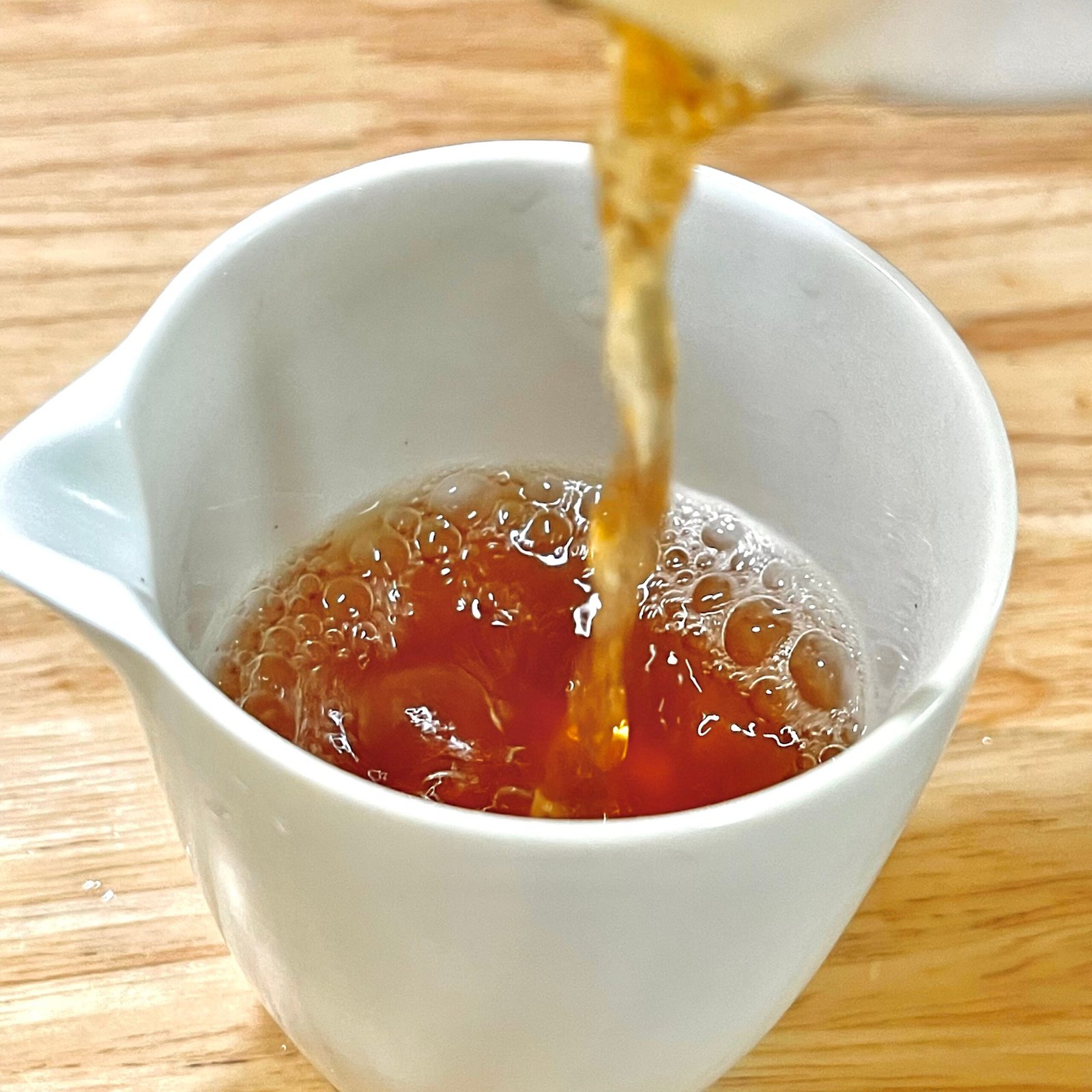
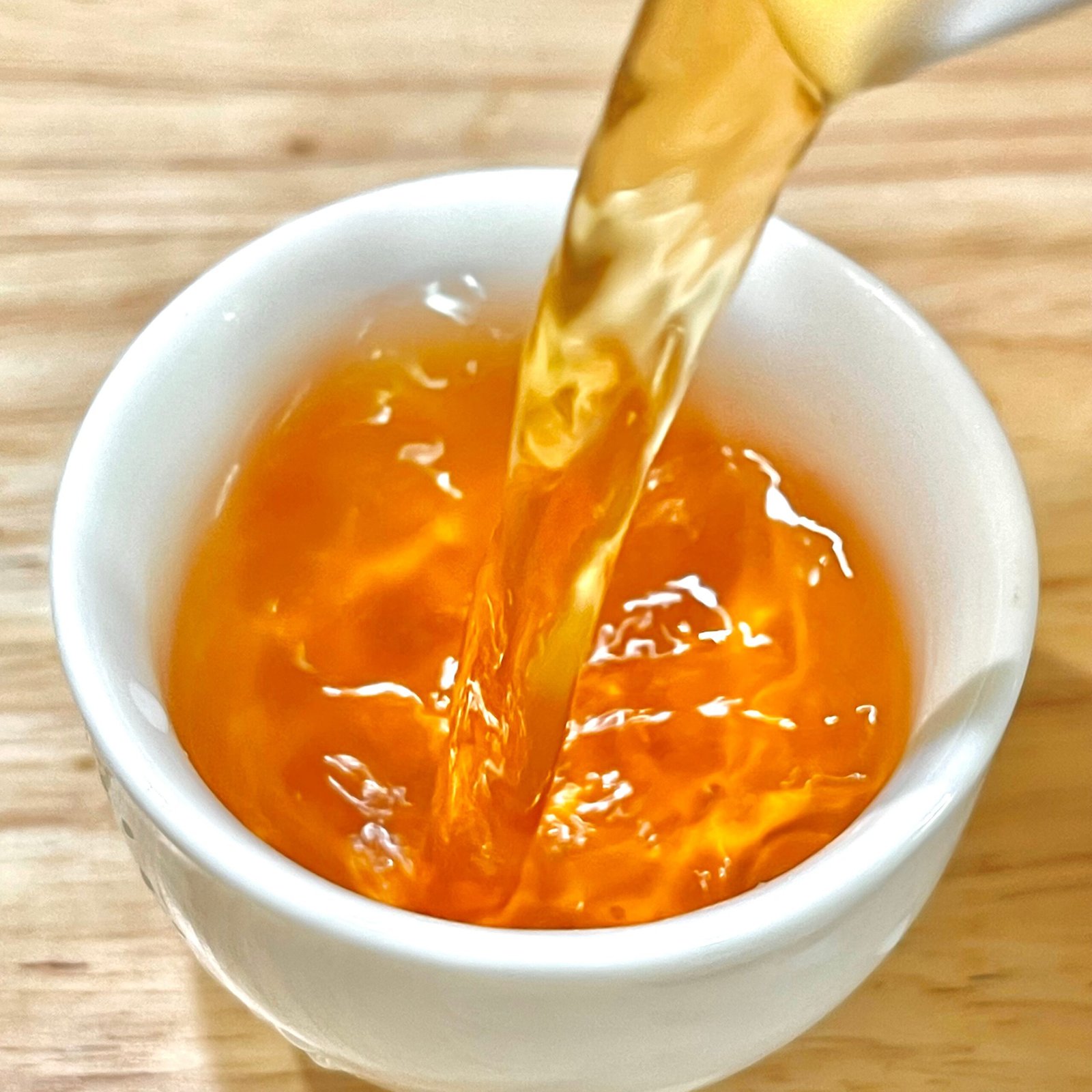
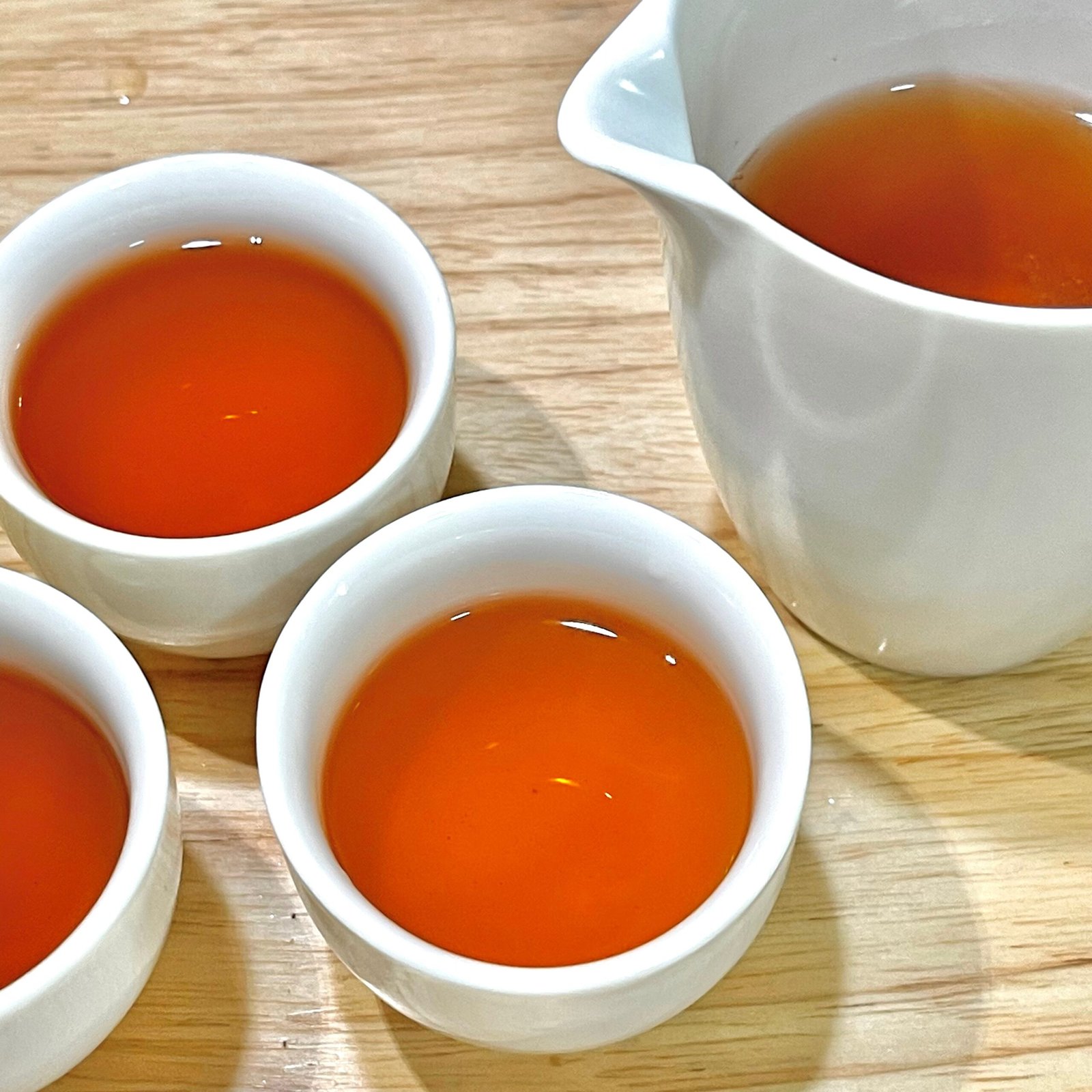
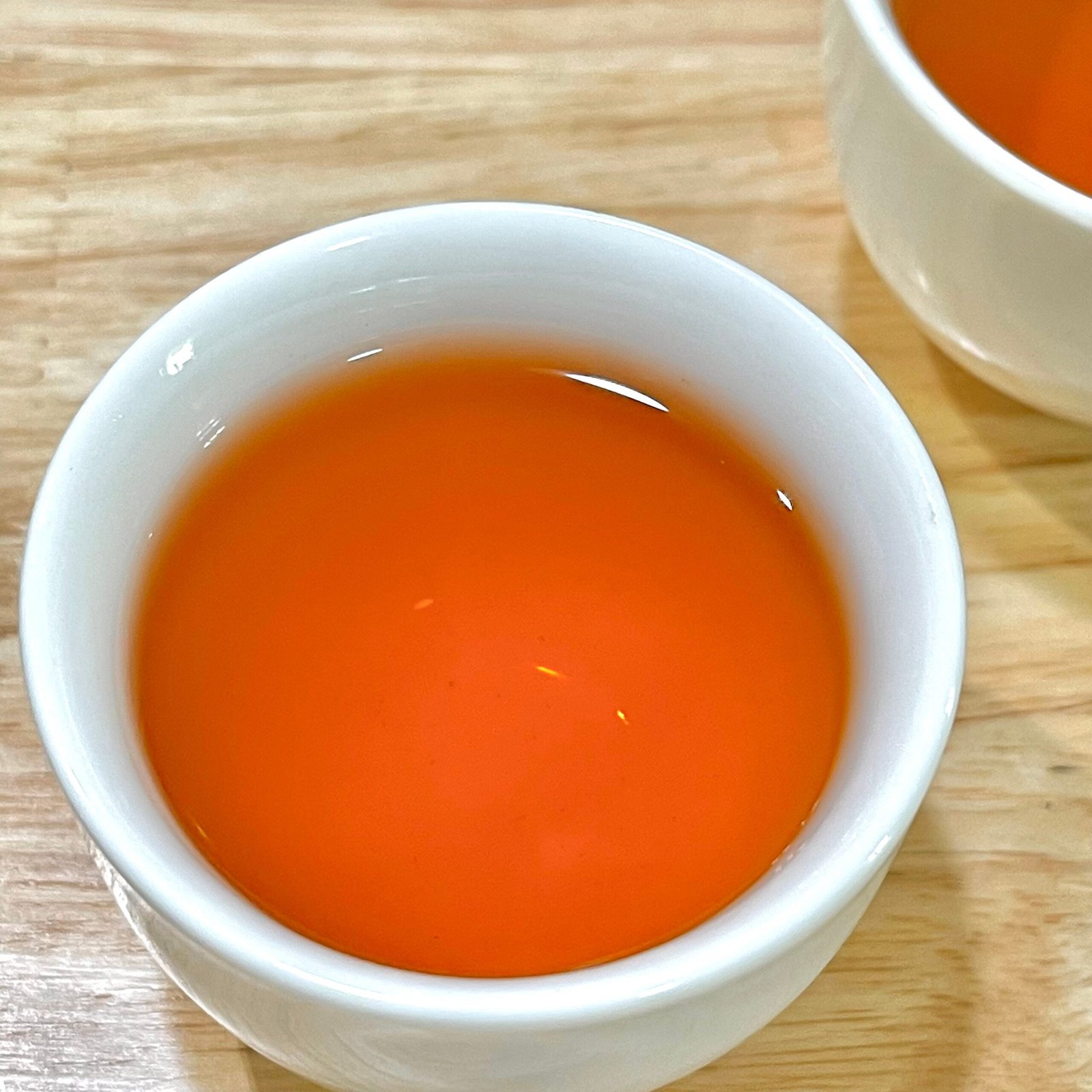
Exquisite Wuyi Shuixian Oolong: 3-Stage Charcoal Roast
Price range: $9.90 through $106.90
Specifications at a Glance
Type: Wuyi High Mountain Old Bush Shuixian (Oolong / Yancha)
Origin: High-Altitude Tea Region, Wuyishan, Fujian Province, China
Harvest: Spring 2026
Cultivar & Tree Age: Lao Shu Shuixian (50+ Year Old Bush)
Roast Level: Traditional 3-Stage Charcoal Roast (Medium Roast / Zhong Huo)
Altitude: 1,970 ft – 2,620 ft (600 m – 800 m)
Caffeine: Moderate
Sizes:
4 Packs — 1.17 oz (33.2g | 8.3g × 4)
6 Packs — 1.76 oz (49.8g | 8.3g × 6)
18 Packs — 5.27 oz (149.4g | 8.3g × 18)
30 Packs — 8.78 oz (249g | 8.3g × 30)
60 Packs — 17.57 oz (498g | 8.3g × 60)
Whether you’re new to Wuyi Rock Tea or a seasoned oolong enthusiast, exploring new flavor profiles is half the fun. Curious about other varieties? Every order includes a complimentary surprise sample alongside your tea, so you can explore these rich, mineral nuances firsthand.
Description
Wuyi Shuixian Oolong: 2026 Old Bush Buyer’s Guide
If you’ve ever tried tea sold as wuyi rock tea and felt the flavor fell short, you’re not alone.
The reason is simple: origin is everything.
True Wuyi Da Hong Pao gets its iconic flavor from the unique terroir of the Wuyi Mountains. However, teas from other regions are often processed in a similar style and sold under the same name, leaving buyers guessing what they’re actually drinking.
With MinteaShop, you don’t have to take origin on faith.
We own our tea gardens and processing facility in the heart of the Wuyi Mountains, managing quality from leaf to cup. By skipping flashy packaging and excess cost, we focus entirely on what matters most: the quality of the tea inside.
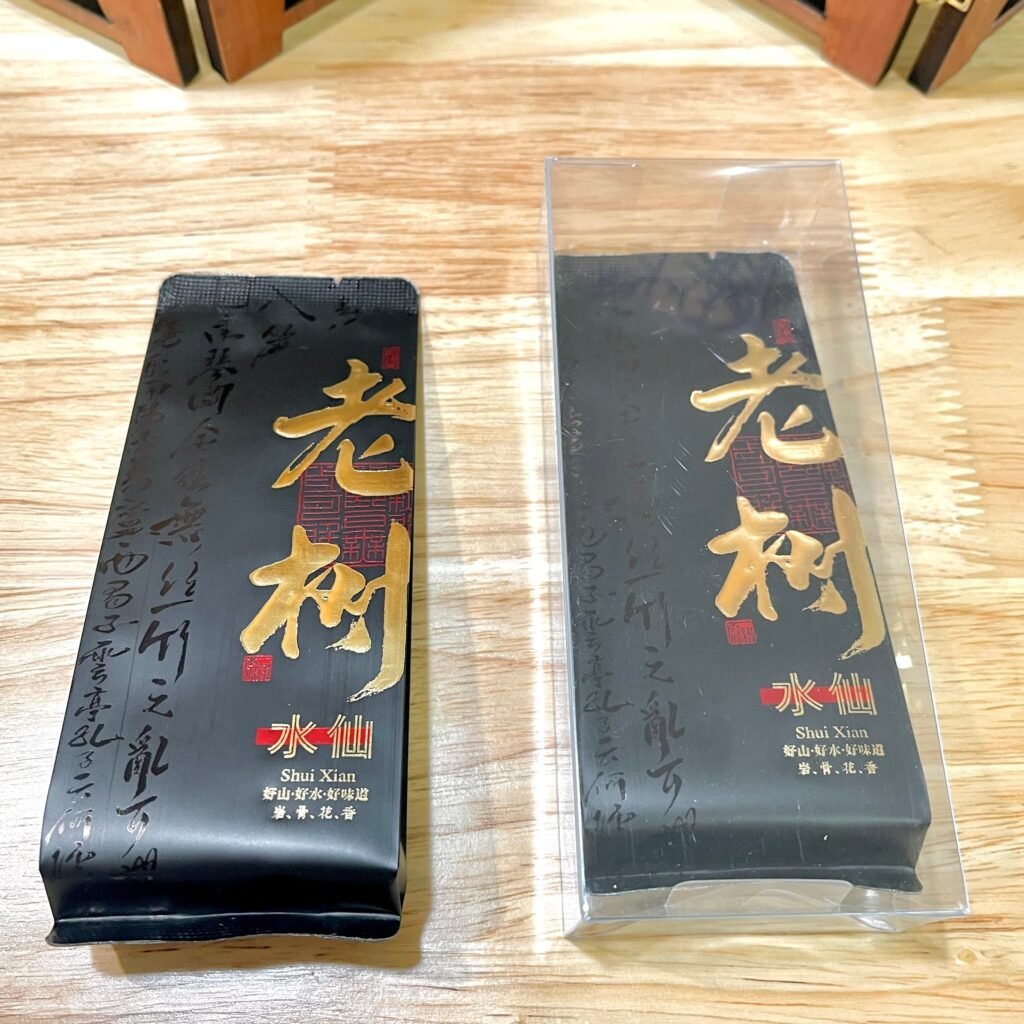
Most “Wuyi Yancha” sold online today is roasted once with electric heat and machine-graded to fake the cliff character. That is why your last rock tea went flat by steep four. This Spring 2026 Wuyi Shan Shuixian oolong comes from 50-year-old Lao Shu trees and went through three separate rounds of slow charcoal roasting in bamboo baskets. We have pushed it to 12 steeps in our tasting room without losing the honey snap. In this 2026 guide, you get the harvest direct from our farmer — and learn to brew it the way our masters actually do.
What Is Wuyi Shan Shuixian Oolong Tea?
Wuyi Shan Shuixian is a oolong cultivar grown in the protected Wuyi Mountains of northern Fujian, China. The name “Shuixian” (水仙) literally means “water immortal” — a nod to the smooth, almost weightless feel the tea leaves on the tongue.
Unlike most other oolong cultivars, mature Shui Xian trees are picked from Lao Shu (老枞, “old bush”) plants that are 50 to 100 years old. Their deep root systems reach further into cliff fissures than younger tea bushes can. That depth is what gives the cup its signature mineral weight.
Why Is High-Altitude Wuyi Tea Different?
These mature Lao Shu trees sit between 600 m and 800 m of altitude on the misty peaks of Wuyi, Fujian. The daily temperature swings are dramatic — 10 °C between noon and dusk. The thick mountain mist slows leaf growth. The result is a leaf that packs in natural sugars and minerals instead of stretching thin for sunlight.
Many assume “high altitude” just means “premium label.” In reality, modern metabolomics research published in recent scientific literature confirms that elevation directly alters the non-volatile metabolite profiles of tea leaves, validating the timeless axiom that high-altitude environments shape superior flavor. Translation: deeper complexity, a smoother mouthfeel, and a naturally sweeter finish. That is exactly what we taste in this lot.
| Altitude Band | Typical Flavor | Caffeine Bite |
|---|---|---|
| Below 300 m (lowland) | Thin, grassy, sharp | High & quick |
| 300–600 m (mid-altitude) | Balanced, mildly mineral | Medium |
| 600–800 m (this lot) | Thick, honeyed, mineral-heavy | Soft & rounded |
What Does 3-Stage Charcoal Roasting Do to Yancha?
Charcoal roasting is what separates real Yancha from generic dark oolong. The leaf goes through three separate rounds of slow burning in bamboo baskets over hardwood charcoal.
Zhong Huo is a medium roast. It softens the raw green edge and brings out warm char and floral honey. Each round of roasting is slow. Each round matters. Here is what each pass does:
- First roast — Locks in leaf shape, kills green astringency, sets the moisture baseline.
- Second roast — Develops the deep toasted-hazelnut and brown-sugar core.
- Third roast — Stamps the long mineral finish into the leaf cell walls.
Guided by time-honored heritage and traditional methods documented by the Food and Agriculture Organization (FAO), our craft bridges ancient mastery with modern science as explored in recent phytochemical research, ensuring authentic flavor and precision in every batch.
Skipping a round gives you a flat, one-dimensional cup. Most cheap “Yancha” on the market is roasted only once, sometimes with electric heat. You can taste the difference in steep one.
What Does Wuyi Shan Shuixian Oolong Taste Like?
I have poured this for friends on slow Sunday mornings. The second steep always gets the most attention. The cup opens with toasted hazelnut and a slow drizzle of wildflower honey. By steep three, an orchid note drifts in. By steep seven, the wet-stone mineral finish is what people keep sipping for.
| Steep | What You Notice |
|---|---|
| Rinse (3 sec) | Hot hay, fresh leaf |
| Steep 1 (5 sec) | Toasted hazelnut, brown sugar |
| Steep 3 (15 sec) | Honey, light orchid |
| Steep 5 (25 sec) | Wet stone, cocoa nib |
| Steep 7 (35 sec) | Pure mineral, faint stone fruit |
| Steep 10+ (50 sec) | Soft water-flower, almost tea-tea |
The body feels thick and creamy. The finish lingers 30 to 45 seconds after swallow. This is one of those rare teas that does not ask for sugar or milk.
How Do You Brew Wuyi Shuixian Oolong the Right Way?
For the full layered experience, brew Gongfu-style. Western-style works too, but you will lose about 40% of the mineral finish.
Step-by-Step Gongfu Method:
Warm up. Preheat your gaiwan and tasting cups with 212°F (100°C) boiling water. Discard the water.
Add tea. Drop in one pre-portioned 8.3g sachet.
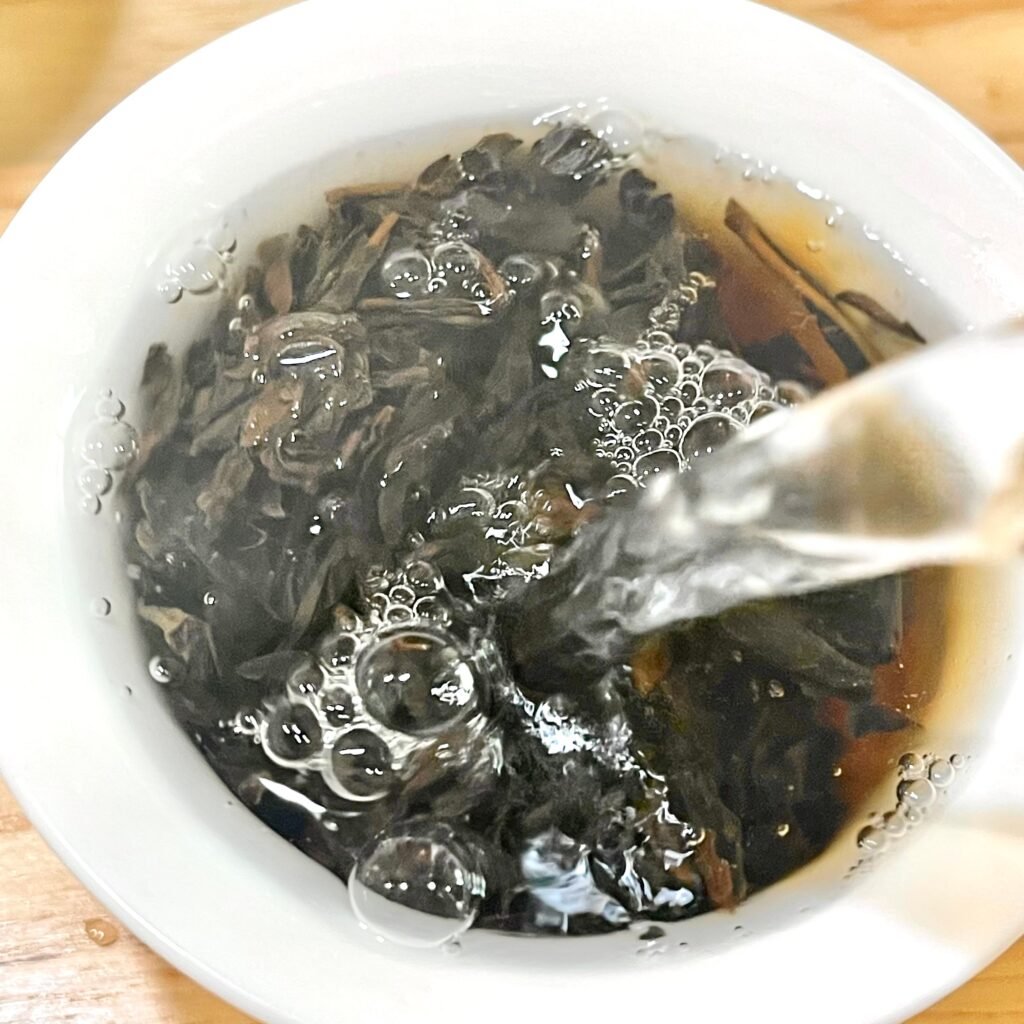
Rinse (Flash Rinse). Pour boiling water to the rim and decant immediately—do not steep. Discard the rinse to awaken the leaves.
First 4 Steeps (Flash Infusions). Refill to the rim and decant immediately for steeps 1 through 4. High-grade Zhengyan leaves release rich flavor instantly without needing rest time.
Build (5th Steep Onward). Starting from the 5th steep, add 5–10 seconds to each subsequent steep to draw out the deeper mineral notes.
Stop. When the tea liquor turns pale golden yellow and the cinnamon aroma flattens.
How Many Times Can You Re-Steep Wuyi Shuixian?
In our tasting room we have pushed this lot to 12 steeps without losing flavor structure. Most drinkers stop at 8. The first three steeps are sweet and round. Steeps four through seven go deep into the mineral layer. Steeps eight through twelve turn into a soft water-flower finish — almost like sniffing a cool stone after rain.
If you are brewing Western-style in a 350 ml pot, expect 2 to 3 strong infusions. The leaves still have life after that, but you will need to bump up the leaf amount or switch to Gongfu to pull more out.
Who Should Drink Wuyi Shan Shuixian Oolong?
This is a tea for people who already know they like oolong and want to go deeper. It also works as a gateway tea for curious black tea drinkers.
- Old tea drinkers who want real cliff mineral character without the $300 collector tin
- Honey-forward oolong fans moving beyond Tieguanyin toward Yancha
- Pairing cooks — duck, charcuterie, aged cheese, dark chocolate
- Office gift buyers who want something more memorable than generic green tea
- Meditation practitioners who want a thick, lingering cup for slow sessions
Is Wuyi Shan Shuixian Oolong Good for Beginners?
Yes, with one caveat. If you have never had a charcoal-roasted tea before, the first steep can smell like a campfire. That is the Zhong Huo roast talking. Give it three steeps. By the third infusion, the roast settles into honey and the mineral layer opens up.
Compared to a high-roast Da Hong Pao or a smoky Lapsang Souchong, this Shui Xian is much more forgiving. The body is creamy, not harsh. The bitterness is almost zero. If you are crossing over from green or white tea, start with a 5-second Gongfu steep and lengthen from there.
Frequently Asked Questions About Wuyi Shan Shuixian Oolong
Is this old bush Shui Xian suitable for beginners?
Yes. Its smooth, non-bitter character and honey-roasted sweetness make it approachable for newcomers. Experienced drinkers will still find enough mineral depth to appreciate. If the first steep smells like a campfire, give it three rounds — the roast settles fast.
What makes high-altitude Shuixian different from ordinary rock tea?
High-altitude Wuyi gardens (600–800 m) produce thicker leaves packed with natural sugars and minerals. Older bush trees add deeper root access to cliff rock. The cup is fuller, longer-finishing, and re-steeps more reliably than thinner commercial lowland teas.
How many times can you re-steep Wuyi Shuixian oolong?
In Gongfu style with 7–8 g in a 110 ml gaiwan, expect 8 to 12 vibrant infusions. We have pushed this Spring 2026 lot to 12 steeps in our tasting room without losing the honey-and-mineral snap.
What does 3-stage charcoal roasting do to Yancha?
It softens the raw green edge, locks in leaf essential oils, and develops a warm roasted char balanced with floral nectar. This is the hallmark of medium-roast Zhong Huo — sweet and rounded rather than smoky or harsh.
How does Wuyi Shuixian compare to Rougui?
| Attribute | Shuixian | Rougui |
|---|---|---|
| Roast level | Medium charcoal | Medium charcoal |
| Main aroma | Honey, orchid, hazelnut | Cinnamon bark |
| Body | Thick, creamy | Bright, clean |
| Mineral finish | Long, wet stone | Sharp, slate |
| Re-steep count | 8–12 | 8–12 |
| Beginner-friendly? | Yes (more) | Yes |
Shuixian is the gentler, sweeter cup. Rougui is louder and more spice-forward.
Where exactly do these old bush trees grow?
On the cliff slopes of the Mount Wuyi UNESCO World Heritage area in northern Fujian, China, at elevations between 600 m and 800 m. The trees are 50 to 100 years old, with roots reaching deep into the weathered red sandstone cliffs.
Does Wuyi Shan Shuixian contain caffeine?
Yes. A Gongfu session of 7–8 g releases roughly 40–60 mg of caffeine across multiple infusions — about half a drip coffee. Split across 8–10 small cups, the lift feels gentle. Avoid brewing on an empty stomach if you are caffeine-sensitive.
How should I store it after opening?
Keep it sealed in the original kraft pouch, away from sunlight, moisture, and strong odors. Do not refrigerate. Use within 12 months for best flavor. In our tasting room, opened pouches stored in a ceramic jar have stayed vibrant for over 14 months.
A Final Note
Whether you’re a seasoned tea drinker or just starting out, every order includes a free bonus: a sample of our everyday Wuyi Tea, alongside an extra variety sample to explore.
Pure, clean, and delicious, this is our go-to for daily sipping. But why include it?
For Experienced Tea Lovers: You might quickly realize that what other vendors market as “premium” is simply our everyday baseline. We cut the markup—never the quality.
For Beginners: It gives you a reliable reference point. Tasting it side-by-side with your main order lets you instantly recognize authentic Wuyi Rock Tea notes, so you’ll never overpay again.
If you’d like to try other authentic styles, explore our Wuyi Rock Tea Collection.
Additional information
| size | 4 Packs (1.17 oz), 6 Packs (1.76 oz), 18 Packs (5.27 oz), 30 Packs (8.78 oz), 60 Packs (17.57 oz) |
|---|
Related products
-

Jin Mu Dan | 2025 Shouning Floral Loose Leaf Oolong Tea
Price range: $9.90 through $46.90Select options This product has multiple variants. The options may be chosen on the product page -
Rare Wuyi Alpine Rougui Oolong Tea – Authentic Rock Tea 2026
Price range: $9.90 through $106.90Select options This product has multiple variants. The options may be chosen on the product page -
Zhengyan Da Hong Pao: 2026 Buyer’s Guide to Big Red Robe
Price range: $23.90 through $299.90Select options This product has multiple variants. The options may be chosen on the product page -
Wuyi Rock Oolong Tea: Best 2026 Matouyan
Price range: $23.90 through $299.90Select options This product has multiple variants. The options may be chosen on the product page
Reviews
There are no reviews yet.