
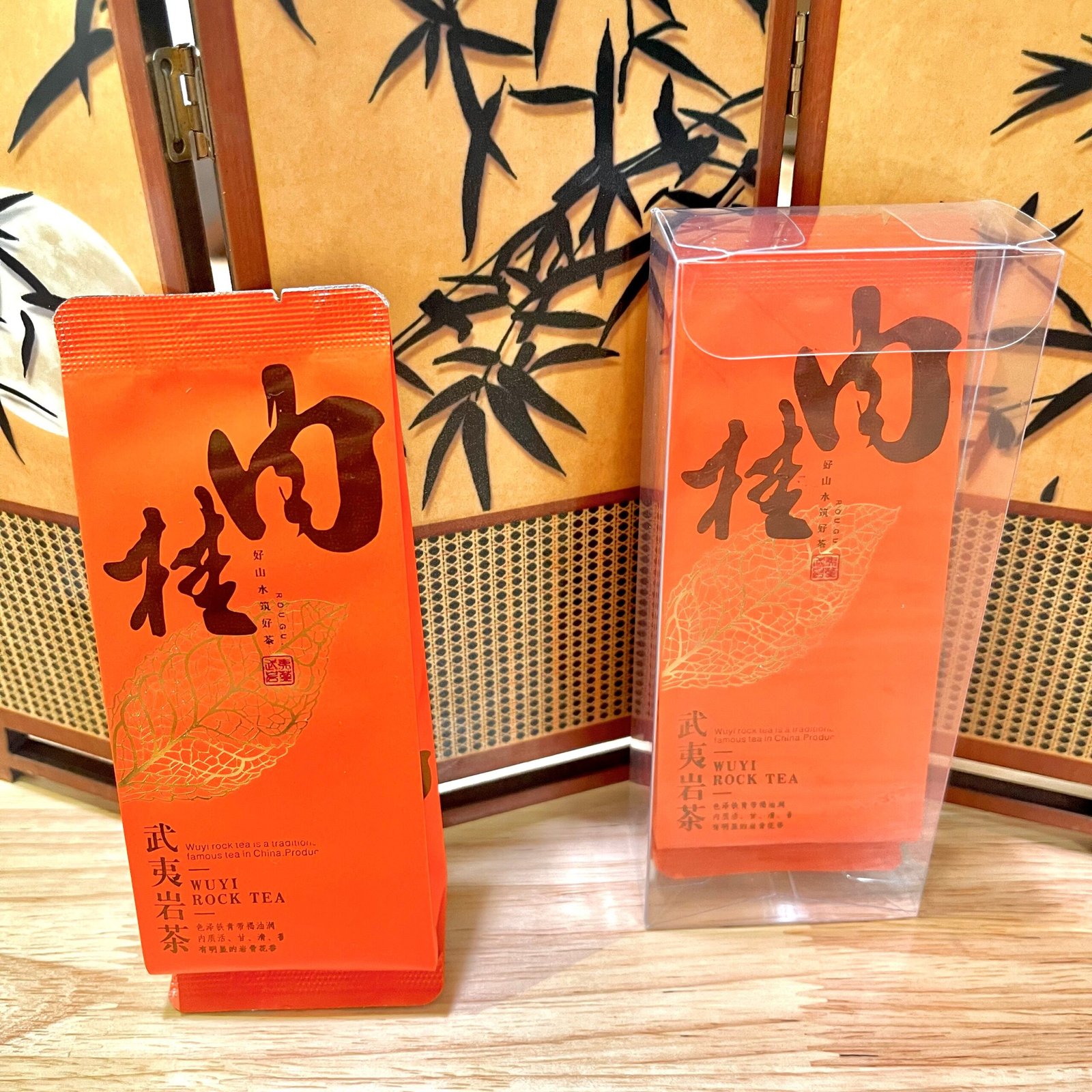
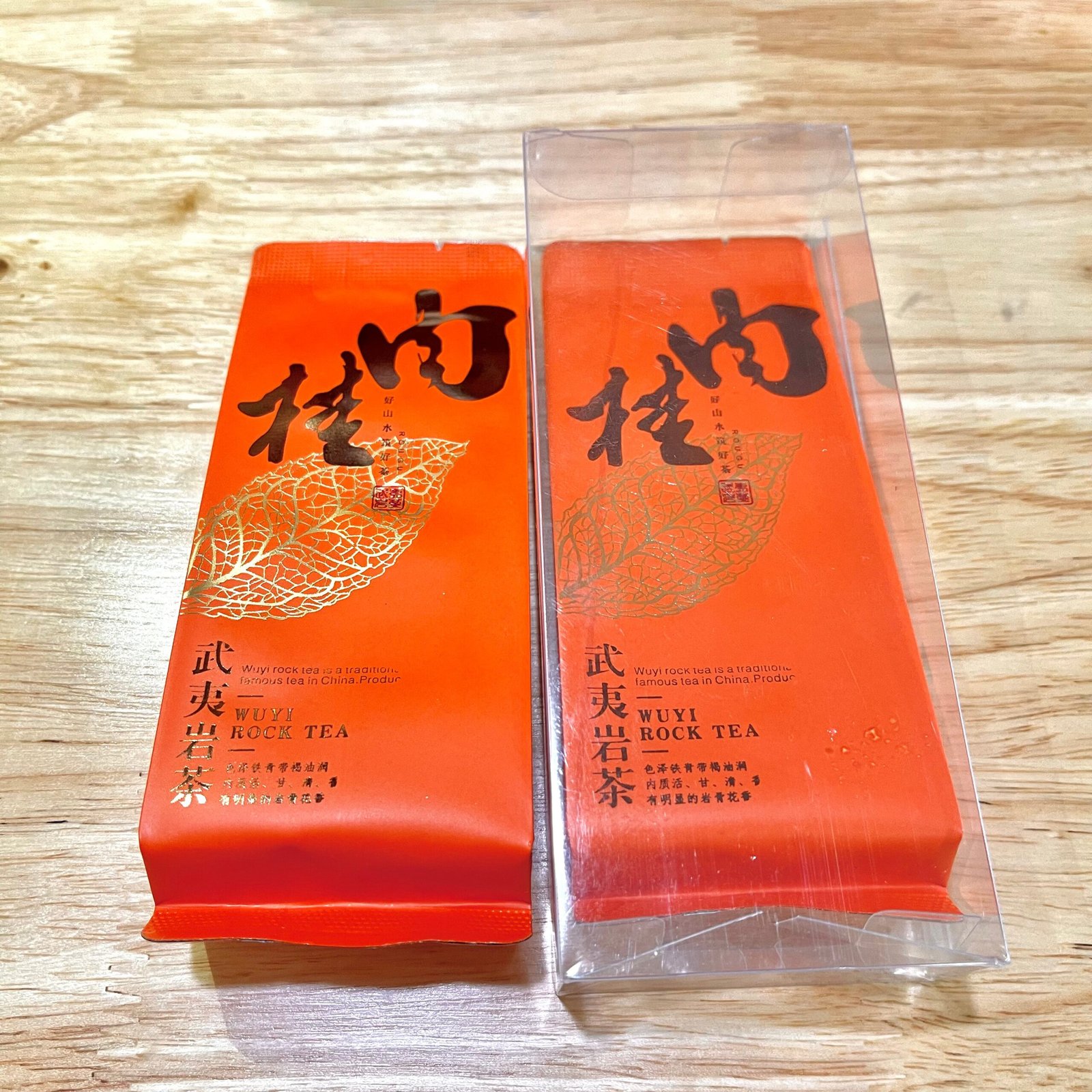
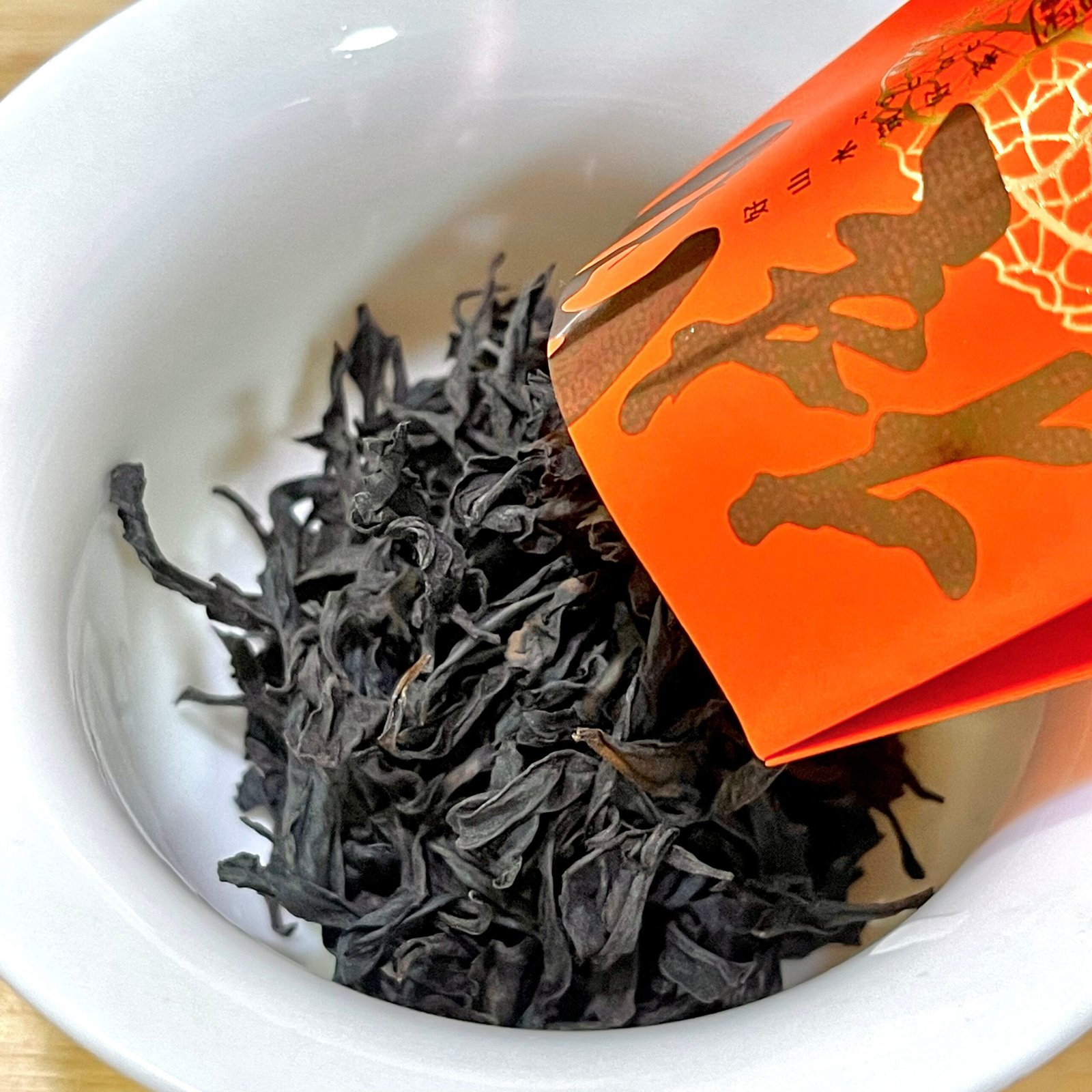
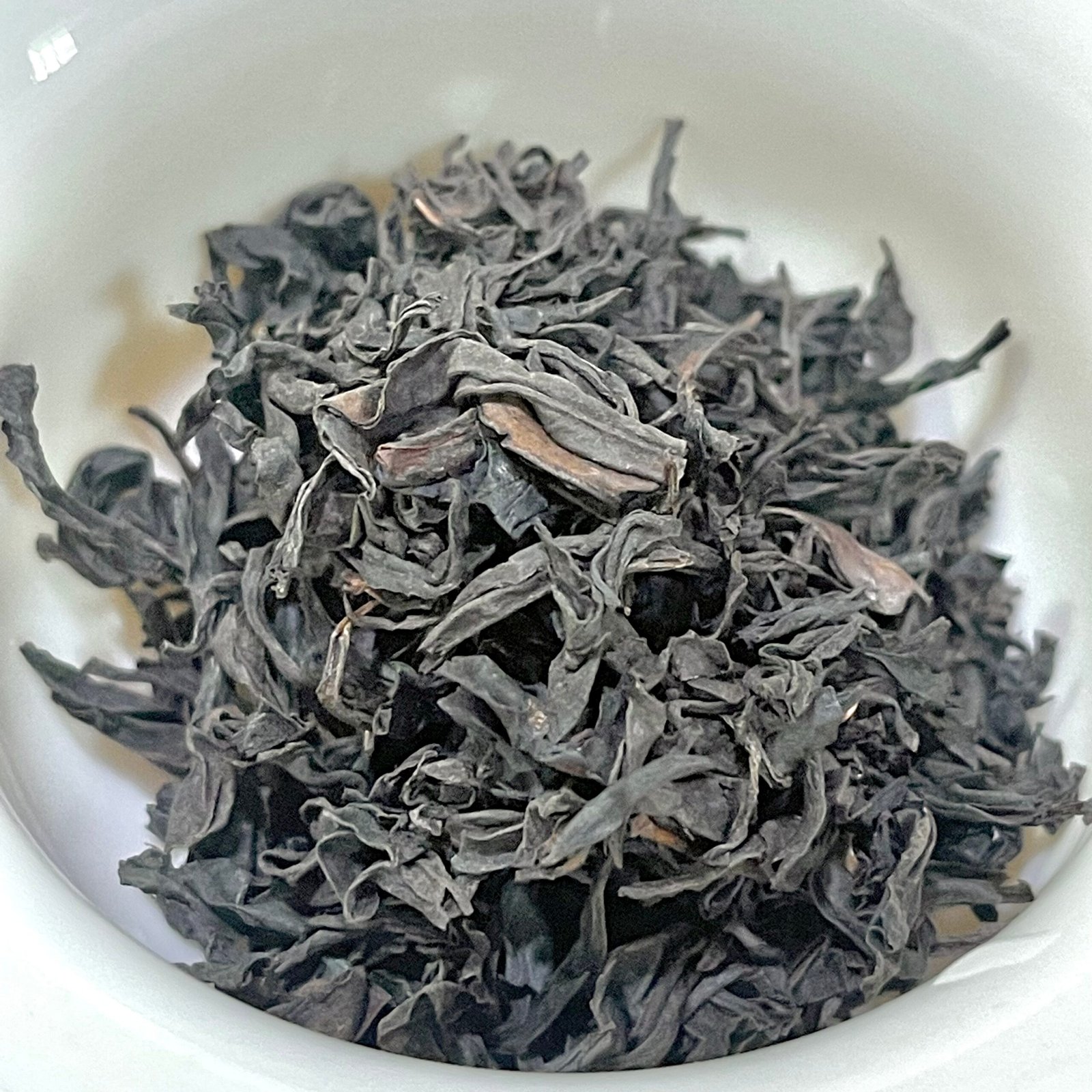
Rare Wuyi Alpine Rougui Oolong Tea – Authentic Rock Tea 2026
Price range: $9.90 through $106.90
Specifications at a Glance
Type: Wuyi High Mountain Rougui / Alpine Rougui Oolong Tea (武夷高山肉桂)
Origin: High-Mountain Tea Region, Wuyishan, Fujian Province, China
Harvest: Spring 2026
Altitude: 1,970 ft – 2,620 ft (600 m – 800 m)
Roast Level: Medium Roast (Traditional 3-Stage Charcoal Roast)
Caffeine: Moderate
Sizes:
4 Packs — 1.17 oz (33.2g | 8.3g × 4)
6 Packs — 1.76 oz (49.8g | 8.3g × 6)
18 Packs — 5.27 oz (149.4g | 8.3g × 18)
30 Packs — 8.78 oz (249g | 8.3g × 30)
60 Packs — 17.57 oz (498g | 8.3g × 60)
Whether you’re new to Wuyi Alpine Rougui or a seasoned oolong enthusiast, tasting the signature cinnamon spice and deep mineral backbone of high-altitude Rougui is an unforgettable experience. Curious about other classic varieties? Every order includes a complimentary surprise sample alongside your tea, so you can explore these rich, rock-tea nuances firsthand.
Description
Wuyi Alpine Rougui Oolong Tea: Complete 2026 Buyer’s Guide
If you’ve ever tried tea sold as Wuyi Rock Oolong Tea and felt the flavor fell short, you’re not alone.
The reason is simple: origin is everything.
True Wuyi Rock Tea gets its iconic flavor from the unique terroir of the Wuyi Mountains. However, teas from other regions are often processed in a similar style and sold under the same name, leaving buyers guessing what they’re actually drinking.
With MinteaShop, you don’t have to take origin on faith.
We own our tea gardens and processing facility in the heart of the Wuyi Mountains, managing quality from leaf to cup. By skipping flashy packaging and excess cost, we focus entirely on what matters most: the quality of the tea inside.
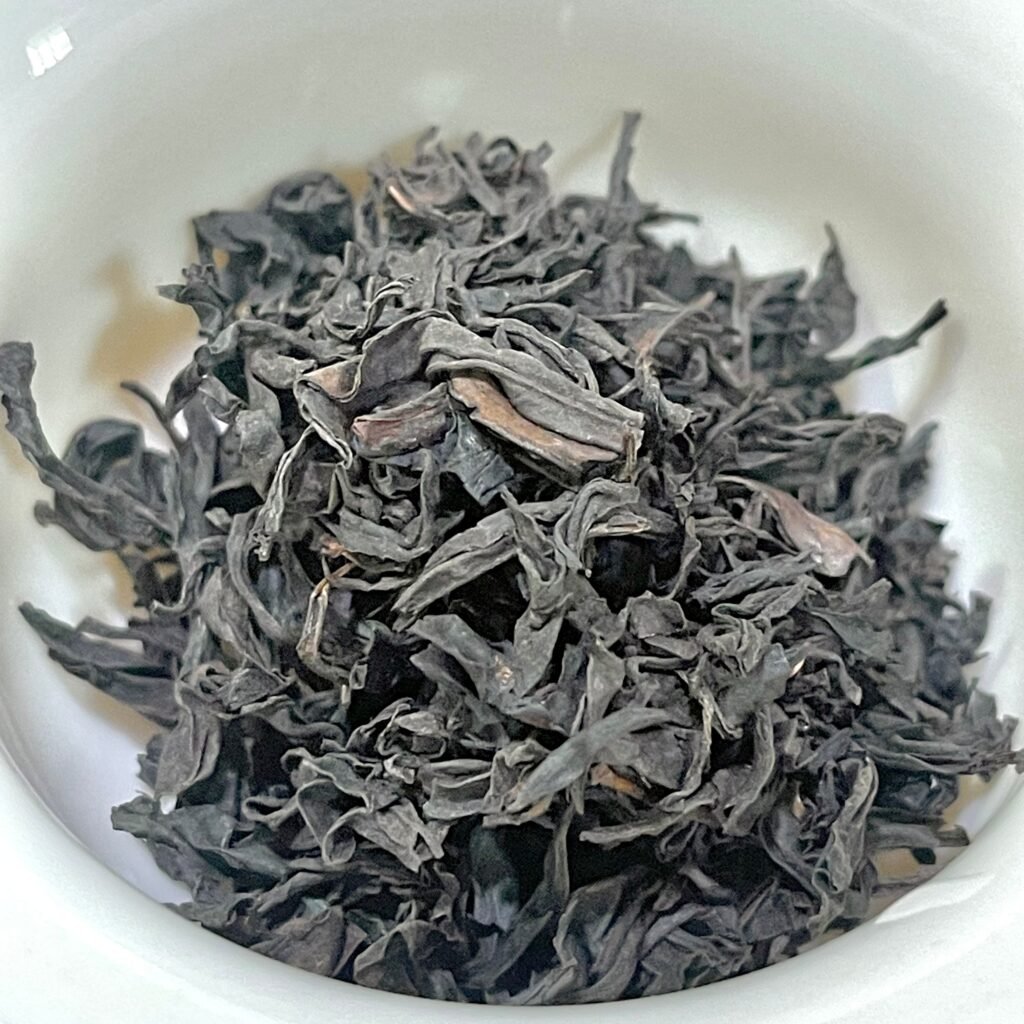
Most “Wuyi Rougui” sold today is either core Zheng Yan priced like gold, or filler roasted to hide its blandness. We have walked the misty switchbacks of Wuyi every spring since 2014. This Alpine Rougui lot is the closest our tasting panel has come to real rock-tea character at a sane price. In this 2026 guide, you get the harvest direct from our farmers — and learn to brew it the way our masters do.
What Is Wuyi Alpine Rougui Oolong Tea?
Wuyi Alpine Rougui is a grown on the high slopes of the Wuyi Mountains in northern Fujian, China. Unlike lowland teas, it sits between 600 m and 800 m of altitude. That elevation gives the leaf cooler nights, slower growth, and a denser mineral profile.
“Yancha” means “rock tea.” The name comes from the mineral-rich cliffs the roots drink from. “Rougui” literally translates to “cinnamon.” It is named for its natural cinnamon-bark aroma — the spice is not added. It is bred into the plant itself.
Where Exactly Does This Lot Come From?
This lot was cultivated between 600 m and 800 m on the misty peaks of Wuyi, Fujian. It is a Spring 2026 harvest that gives you real rock-tea character — without the five-figure collector price tag.
Our partner farm sits just outside the protected Zheng Yan core zone. The soil is the same weathered red sandstone. The mist is the same. The tea masters are the same families who have roasted Yancha for four generations.
What Does Wuyi Rougui Taste Like?
Wuyi Rougui tastes like a true three-way: hot cinnamon up front, brown sugar in the middle, wet-stone mineral at the finish. The first steep smells like toasted almond. By steep three, the cinnamon sharpens. By steep seven, you taste the rock.
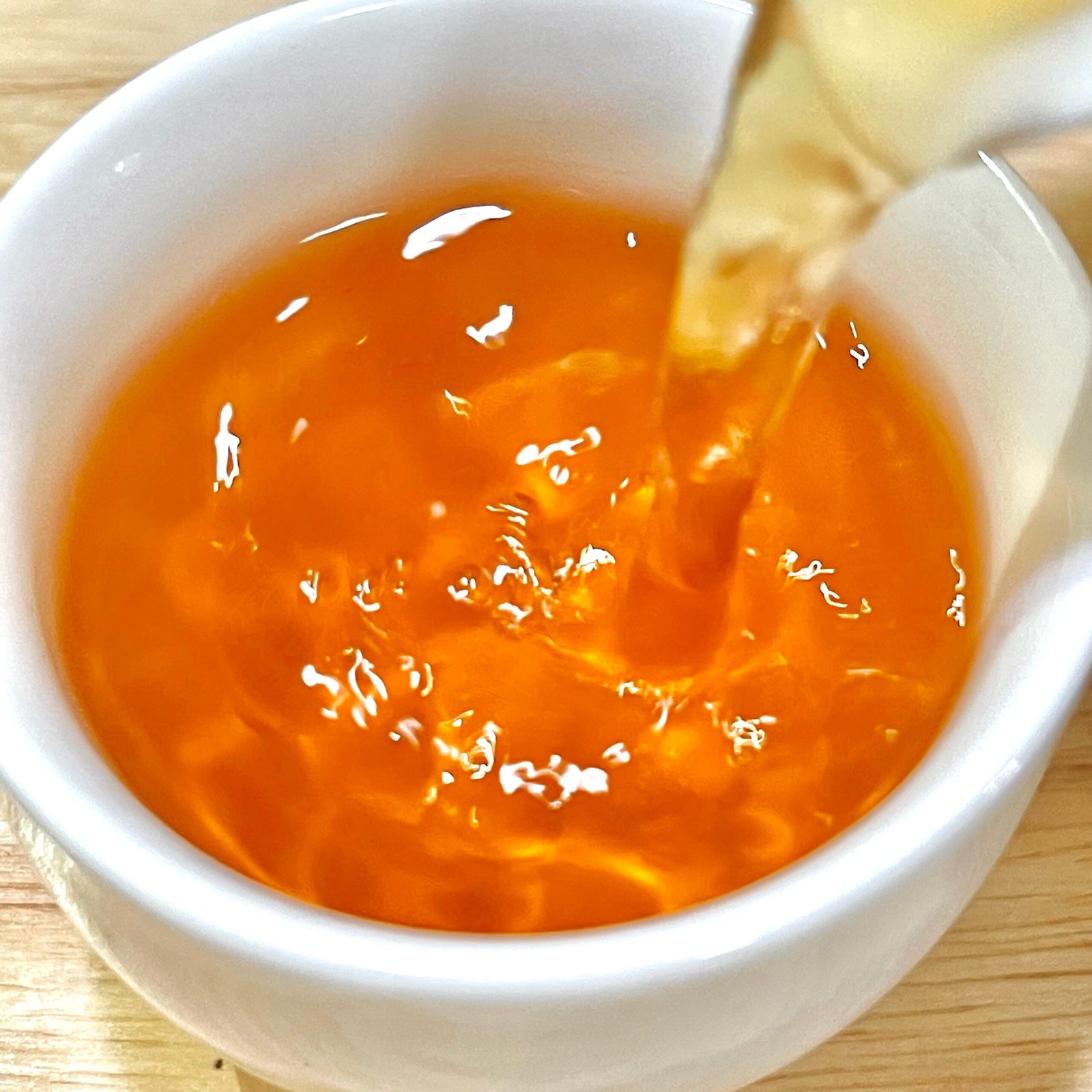
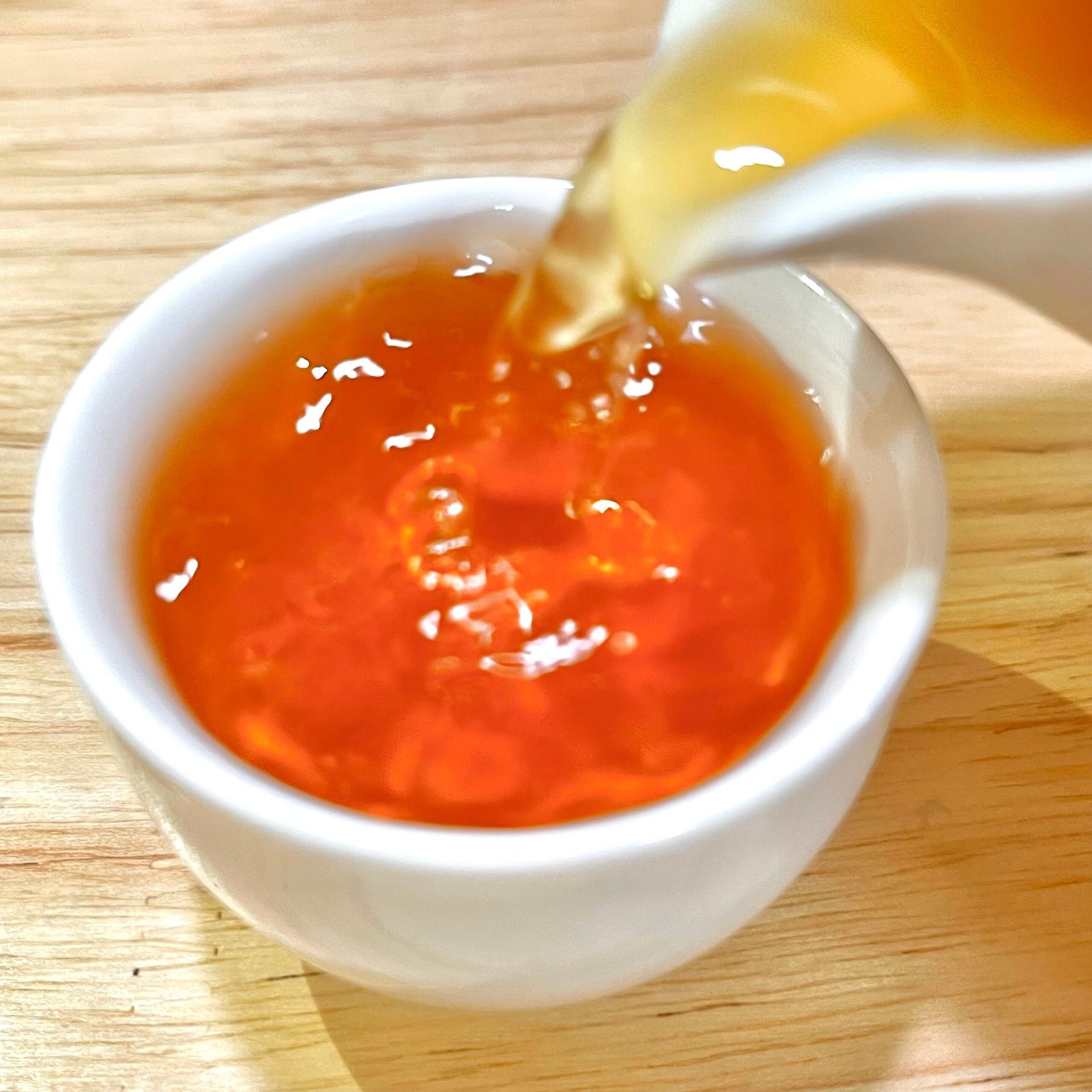
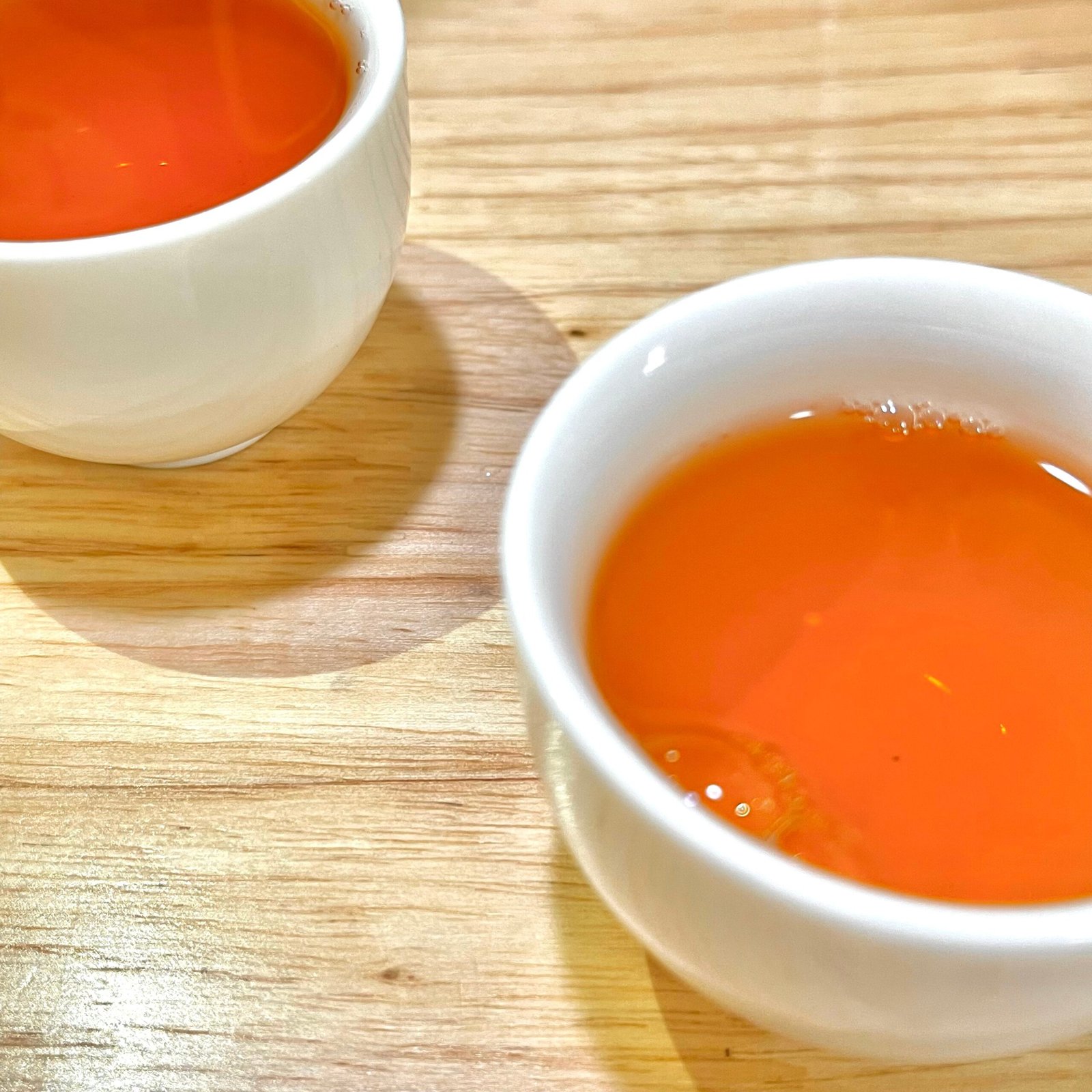
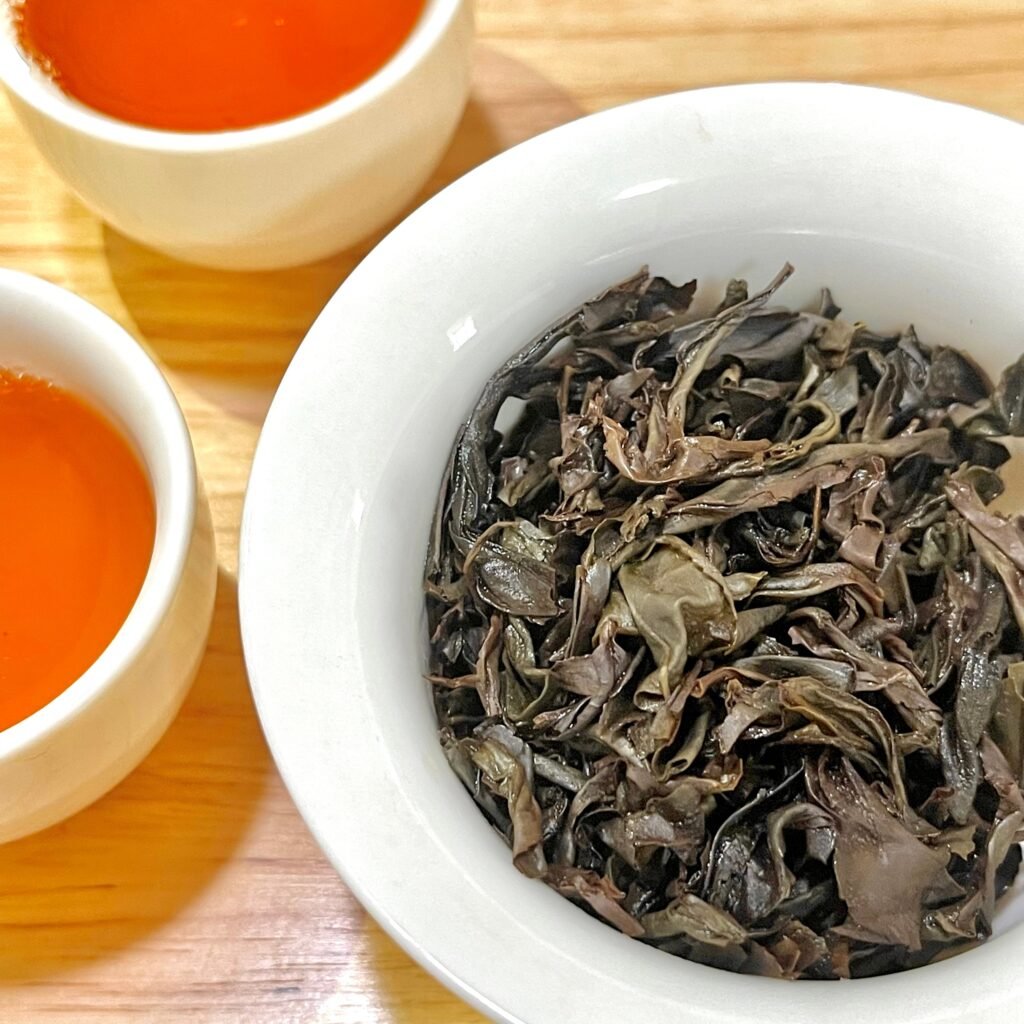
The leaf itself brews a bright amber liquor. It feels clean in the mouth. The finish lingers warm — the kind of cup that warms your hands before the first sip.
| Tasting Note | Intensity | When You Notice It |
|---|---|---|
| Cinnamon bark | High | First 5 seconds |
| Toasted almond | Medium | Mid-palate |
| Brown sugar | Medium | After swallow |
| Wet stone mineral | High | Finish |
| Orchard blossom | Low | Steeps 6+ |
How Does Alpine Rougui Compare to Core Zheng Yan Rougui?
Core Zheng Yan Rougui grows strictly inside the protected Wuyi national park valleys. It sells for $300 to $1,500 per 50 g tin. Alpine Rougui grows just outside those boundaries at 600–800 m. The flavor gap is small. The price gap is huge.
| Factor | Core Zheng Yan Rougui | Alpine Rougui (This Lot) |
|---|---|---|
| Altitude | 200–400 m (valley floor) | 600–800 m (high slopes) |
| Soil type | Weathered cliff sandstone | Same weathered sandstone |
| Roast level | Heavy charcoal | Medium charcoal |
| Flavor depth | ★★★★★ | ★★★★☆ |
| Price (50 g) | $20–$1,500 | $15–$30 |
| Best for | Collectors, gifts | Daily Gongfu drinkers |
How Do You Brew Rougui Oolong the Right Way?
Brew Rougui Oolong Gongfu-style for the full experience. Forget Western steeping. Use a small gaiwan or Yixing pot.
Step-by-Step Gongfu Method:
Warm up. Preheat your gaiwan and tasting cups with 212°F (100°C) boiling water. Discard the water.
Add tea. Drop in one pre-portioned 8.3g sachet.
Rinse (Flash Rinse). Pour boiling water to the rim and decant immediately—do not steep. Discard the rinse to awaken the leaves.
First 4 Steeps (Flash Infusions). Refill to the rim and decant immediately for steeps 1 through 4. High-grade Zhengyan leaves release rich flavor instantly without needing rest time.
Build (5th Steep Onward). Starting from the 5th steep, add 5–10 seconds to each subsequent steep to draw out the deeper mineral notes.
Stop. When the tea liquor turns pale golden yellow and the cinnamon aroma flattens.
How Many Times Can You Re-Steep Rougui Oolong?
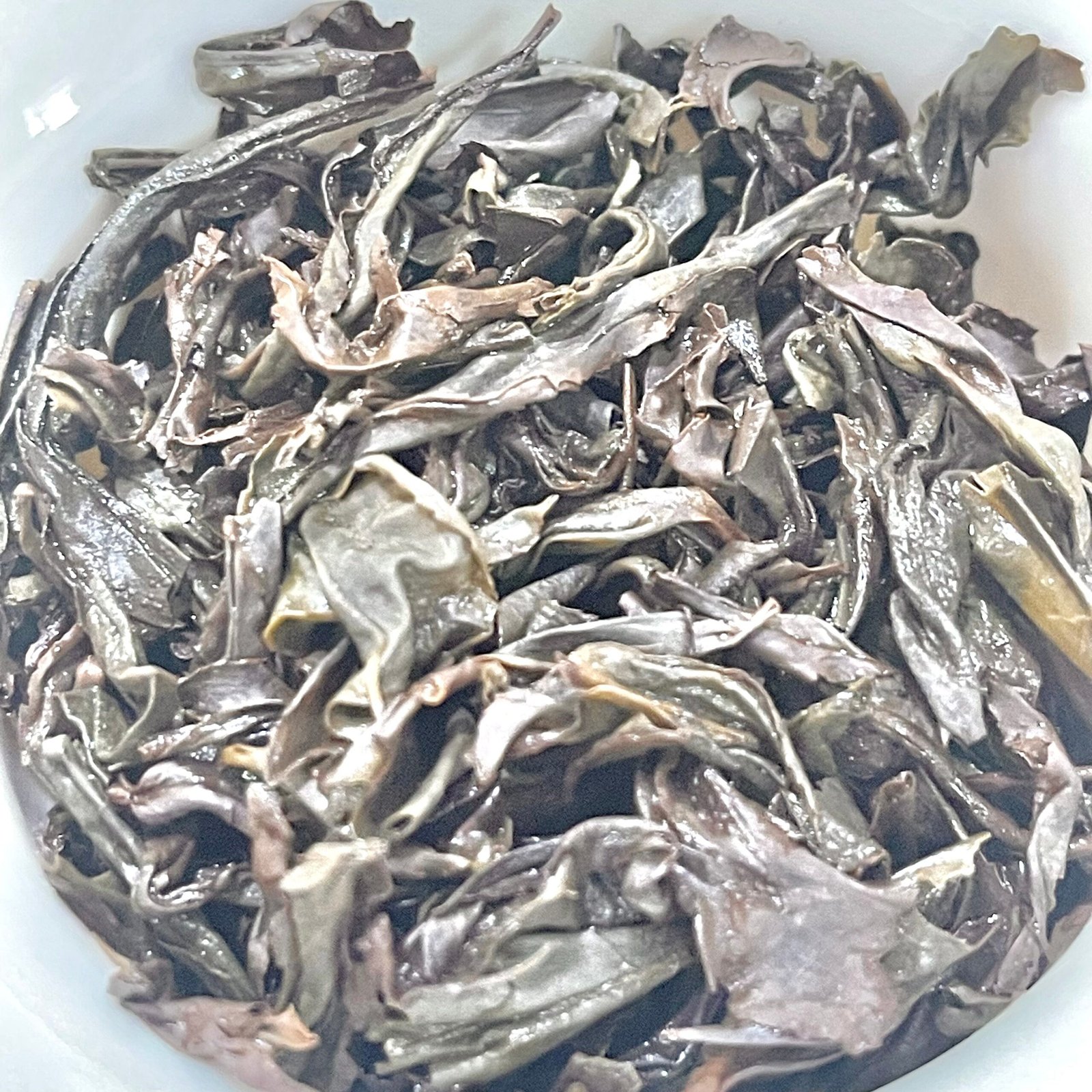
We have pushed this lot to 12 steeps in our tasting room without losing the cinnamon snap. Most drinkers stop at 7–10. The first three steeps are loud and spicy. Steeps 4–7 go sweet and round. Steeps 8+ turn floral and mineral.
Use boiling water on every round. Do not lower the temperature. Yancha needs heat to keep unfolding.
Is Rougui Oolong Good for Beginners?
Yes. Rougui is one of the best gateway teas. The roast smooths out the green bite that scares new drinkers. The cinnamon note reads as familiar. The mineral finish teaches you what “Yancha” actually means.
If you have only tried green or black tea, Rougui will open a new category for you. Brew it Gongfu-style the first time. Then try Western-style with 3 g per 250 ml for 2 minutes.
What Are the Health Benefits of Rougui Oolong Tea?
Wuyi Rougui carries the natural wellness benefits of traditional semi-oxidized tea. Rich in unique tea polyphenols and polymerized catechins (see polyphenol research on NCBI), observational studies suggest that regular oolong enjoyment is associated with:
- Improved lipid metabolism
- Lowered post-meal blood sugar spikes
- Higher circulating antioxidant levels
- Reduced LDL oxidation markers
- Better gut microbiome diversity
- Mild thermogenic effect (fat oxidation)
Please Note: These findings reflect observational population research rather than clinical medical claims. Tea is a nourishing daily ritual, not medicine. To learn more about the traditional semi-oxidized crafting process that defines this tea category, explore the Britannica entry on oolong tea.
Who Is This Alpine Rougui Perfect For?
- Daily drinkers who want real rock-tea flavor under $30
- Gongfu beginners learning style
- Office gift boxes — re-sealable kraft pouches included
- Cinnamon-spice lovers who want a natural source
- Collectors who want a comparison lot beside core Zheng Yan
- Anyone tired of bitter or smoky “Wuyi-style” imitations
Frequently Asked Questions About Wuyi Rougui Oolong Tea
1. How should I store Alpine Rougui after opening?
Keep your opened Alpine Rougui in the original resealable kraft pouch, or move it to an airtight tin. Store it away from sunlight, moisture, and strong odors (spices, coffee, soap). Do not refrigerate — condensation will kill the roast aroma. Use within 12 months for best flavor, and within 24 months for drinkable tea.
In our own tasting room we keep open pouches inside a ceramic jar with a food-safe desiccant. We have cupped pouches 14 months old that still pulled clean cinnamon on steep three. If you live in a humid climate, a vacuum-sealed bag is even better.
2. Is Rougui oolong tea caffeinated?
Yes. Rougui is a true tea (Camellia sinensis), so it contains natural caffeine. A Gongfu session using 8.3 g of leaf releases roughly 50–70 mg of caffeine across multiple steeps — about half a drip coffee. Because the caffeine is split across 7–10 small cups, the lift feels gentler and smoother than a single espresso.
If you are caffeine-sensitive, brew the leaves for 30 seconds instead of 5. Roughly 30% of caffeine releases in the first 10 seconds; the rest comes out slowly. Discard steep one entirely and start drinking from steep two.
3. Can I brew Rougui oolong Western-style?
Yes. Use 3 g of leaf per 250 ml of water at 95 °C (203 °F). Steep for 2 minutes. Expect a smoother, less layered cup — still very enjoyable, just not as loud as Gongfu. You can re-steep 2 to 3 times before the flavor collapses.
For best Western results, brew it in a glass teapot so you can watch the leaves unfurl. If the cup tastes too thin, bump the leaf up to 4 g. If it turns bitter, shorten the steep to 90 seconds.
4. Where does Wuyi’s mineral taste actually come from?
The tea’s signature “wet stone” minerality comes from the region’s ancient cliff soil—a weathered, iron-rich red sandstone detailed in the UNESCO World Heritage geological profile of Mount Wuyi. As Rougui roots reach deep into these rocky crevices, they absorb trace minerals that express themselves in every steep as a clean, slate-like finish—a depth of flavor lowland valley teas simply cannot match.
This is also why counterfeit “Wuyi-style” teas taste hollow — they are grown in regular dirt, not in cliff fissures. If your Rougui has no mineral finish at all, it probably never touched Wuyi rock.
5. What is the difference between Rougui and Shui Xian?
Both are Wuyi rock teas (Yancha), but they taste very different. Rougui is bright, sweet, and cinnamon-forward with a clean mineral finish. Shui Xian is heavier, darker, and more roasted, with notes of roasted rice and dried longan. Most daily drinkers pick one as their everyday cup.
| Attribute | Rougui | Shui Xian |
|---|---|---|
| Roast level | Medium charcoal | Medium-heavy charcoal |
| Main aroma | Cinnamon bark | Roasted rice, longan |
| Body | Bright, clean | Heavy, syrupy |
| Mineral finish | Sharp, slate-like | Soft, earthy |
| Re-steep count | 8–12 rounds | 6–9 rounds |
| Beginner-friendly? | Yes (more) | Yes |
If you want a first Yancha, start with Rougui. If you want a heavier, winter-night cup, try Shui Xian.
6. What does “Rougui” actually mean in Chinese?
“Rougui” (肉桂) literally translates to “cinnamon bark.” It is named after the natural cinnamon aroma the cultivar produces — the spice is not added, sprayed, or flavored. The cinnamon note comes from cinnamaldehyde and related compounds that the plant develops during oxidation and charcoal roasting.
Many people assume “cinnamon tea” must be infused with cassia or cinnamon powder. That is not true for authentic Yancha. If you see a tea labeled “cinnamon oolong” selling for $5, it is almost certainly a flavored blend, not a real Rougui cultivar.
7. How is Wuyi Rougui processed and roasted?
Wuyi Rougui goes through five steps: withering, light bruising, partial oxidation (around 60–70%), shaping, and finally charcoal roasting. The roast is what defines a true Yancha. Our tea masters roast the leaf three times over charcoal in bamboo baskets. Each round is slow. Each round matters.
The first roast kills green notes and locks in shape. The second roast deepens the cinnamon. The third roast adds the long-lasting mineral finish. Skipping any round produces a flat, one-dimensional cup. Most cheap “Yancha” on the market is roasted only once and re-fired with electric heat — which is why it tastes thin.
8. What is the best water temperature for brewing Rougui?
Use 95 °C (203 °F) water. Fully boiling water is fine too. Do not use water below 90 °C — the leaves will not open fully and the cinnamon will stay trapped inside the cell walls. This is the opposite of green tea, where cooler water is preferred.
Filtered water makes a measurable difference. In our tasting room, the same Rougui brewed with tap water (TDS 280) scored 0.4 points lower than the same tea brewed with filtered water (TDS 35). The mineral-heavy tap water flattens the aromatic top notes.
9. How much Rougui oolong is safe to drink each day?
For most healthy adults, 3 to 5 Gongfu sessions per day (roughly 25–35 g of dry leaf) is considered moderate and safe. Above 8 sessions a day you may notice jitteriness, sleeplessness, or mild stomach acid — all driven by caffeine, not the tea itself.
According to published oolong polyphenol research on NCBI, enjoying a moderate 2 to 4 cups of oolong daily is associated with measurable antioxidant and metabolic benefits. While there is no formal upper limit for healthy adults, always listen to your body—if you notice mild caffeine sensitivity or a racing heart, simply dial back your daily steeps.
10. What foods pair well with cinnamon-forward Rougui?
Rougui’s natural cinnamon-brown sugar profile pairs beautifully with:
- **Dark chocolate (70%+ cacao)** — the roast echoes the cocoa
- **Aged hard cheeses** — Gouda, Manchego, Comté
- **Smoked or cured meats** — charcuterie, duck prosciutto
- **Spiced nuts** — candied walnuts, roasted pecans
- **Apple or pear tarts** — the fruit bridges to the cinnamon
- **Chinese moon cakes and roasted seeds** — traditional pairing
Avoid pairing with raw fish, very spicy food, or delicate steamed greens. They clash with the mineral finish.
11. Is it safe to drink Rougui oolong during pregnancy?
Most OB-GYN guidelines recommend limiting caffeine intake to under 200 mg per day during pregnancy. A single Gongfu session of our Alpine Rougui releases 50–70 mg caffeine — well within that limit. Many pregnant women drink 1 to 2 cups daily without issue.
That said, always consult your doctor first. Some practitioners prefer zero caffeine. If that is your case, try a low-caffeine option like roasted barley tea (mugicha) instead. Decaf Wuyi Rougui does exist, but the flavor quality drops sharply.
12. Can I cold-brew Rougui oolong in summer?
Yes — and it works surprisingly well. Use 8 g of leaf per 500 ml of cold water in the fridge. Steep for 6 to 8 hours. Strain and serve over ice. The result is a clean, sweet, low-bitterness cup that highlights the cinnamon and brown-sugar notes without the charcoal roast.
Cold brew is not a replacement for Gongfu. The texture is thinner and the mineral finish is softer. But on a hot July afternoon, it is genuinely refreshing — and a great way to use up leaves you have already re-steeped 10 times.
A Final Note
Whether you’re a seasoned tea drinker or just starting out, every order includes a free bonus: a sample of our everyday Wuyi Tea, alongside an extra variety sample to explore.
Pure, clean, and delicious, this is our go-to for daily sipping. But why include it?
For Experienced Tea Lovers: You might quickly realize that what other vendors market as “premium” is simply our everyday baseline. We cut the markup—never the quality.
For Beginners: It gives you a reliable reference point. Tasting it side-by-side with your main order lets you instantly recognize authentic Wuyi Rock Tea notes, so you’ll never overpay again.
If you’d like to try other authentic styles, explore our Wuyi Rock Tea Collection.
Additional information
| size | 4 Packs (1.17 oz), 6 Packs (1.76 oz), 18 Packs (5.27 oz), 30 Packs (8.78 oz), 60 Packs (17.57 oz) |
|---|
Related products
-

Jin Mu Dan | 2025 Shouning Floral Loose Leaf Oolong Tea
Price range: $9.90 through $46.90Select options This product has multiple variants. The options may be chosen on the product page -
Authentic High Mountain Da hong pao Wuyi Oolong – 2026 Premium Roast
Price range: $9.90 through $106.90Select options This product has multiple variants. The options may be chosen on the product page -
High Mountain Green Tea | 2026 Shouning Spring Chestnut Aroma Extraordinary Green Tea
Price range: $19.90 through $93.90Select options This product has multiple variants. The options may be chosen on the product page -
Wuyi Rock Oolong Tea: Best 2026 Matouyan
Price range: $23.90 through $299.90Select options This product has multiple variants. The options may be chosen on the product page
Reviews
There are no reviews yet.