
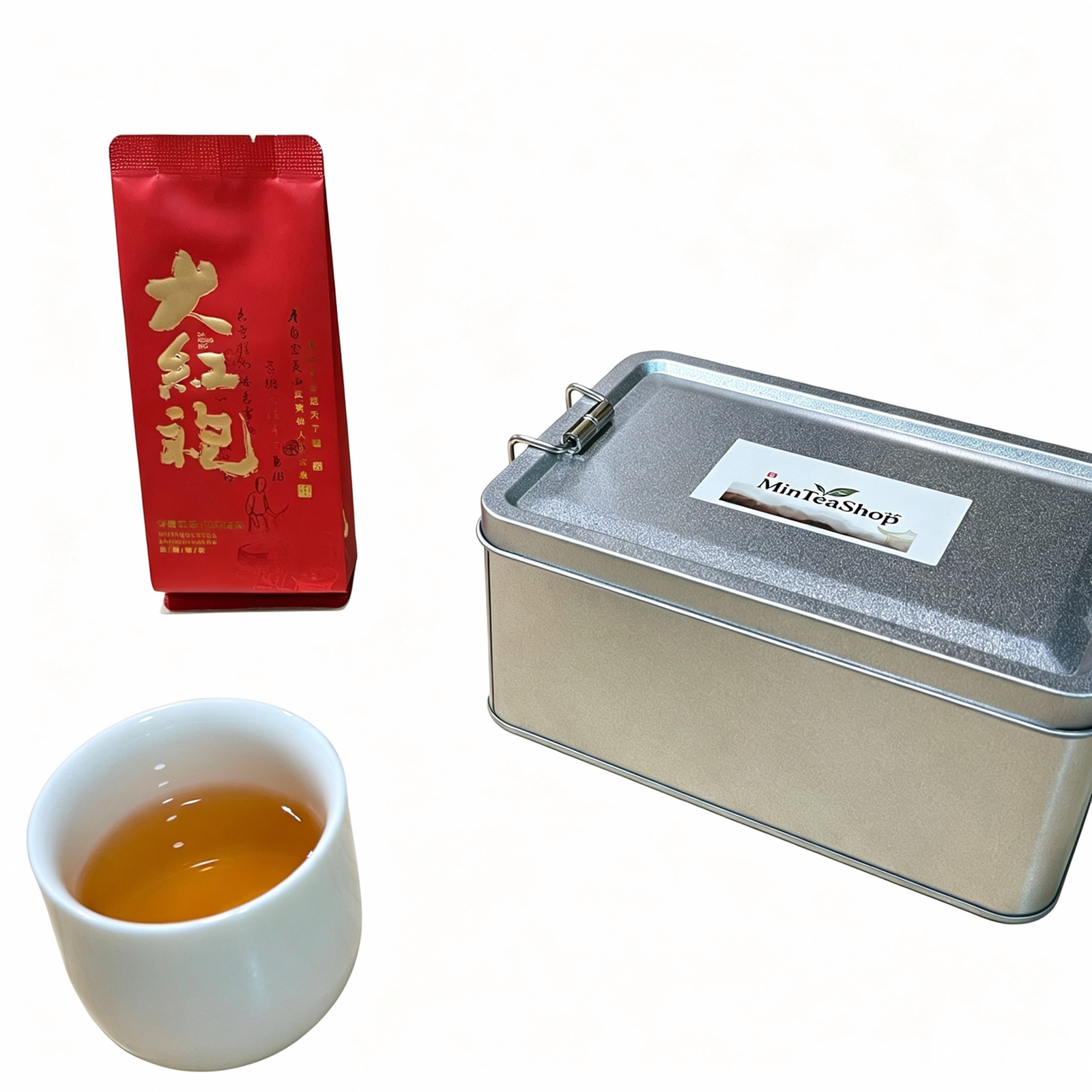
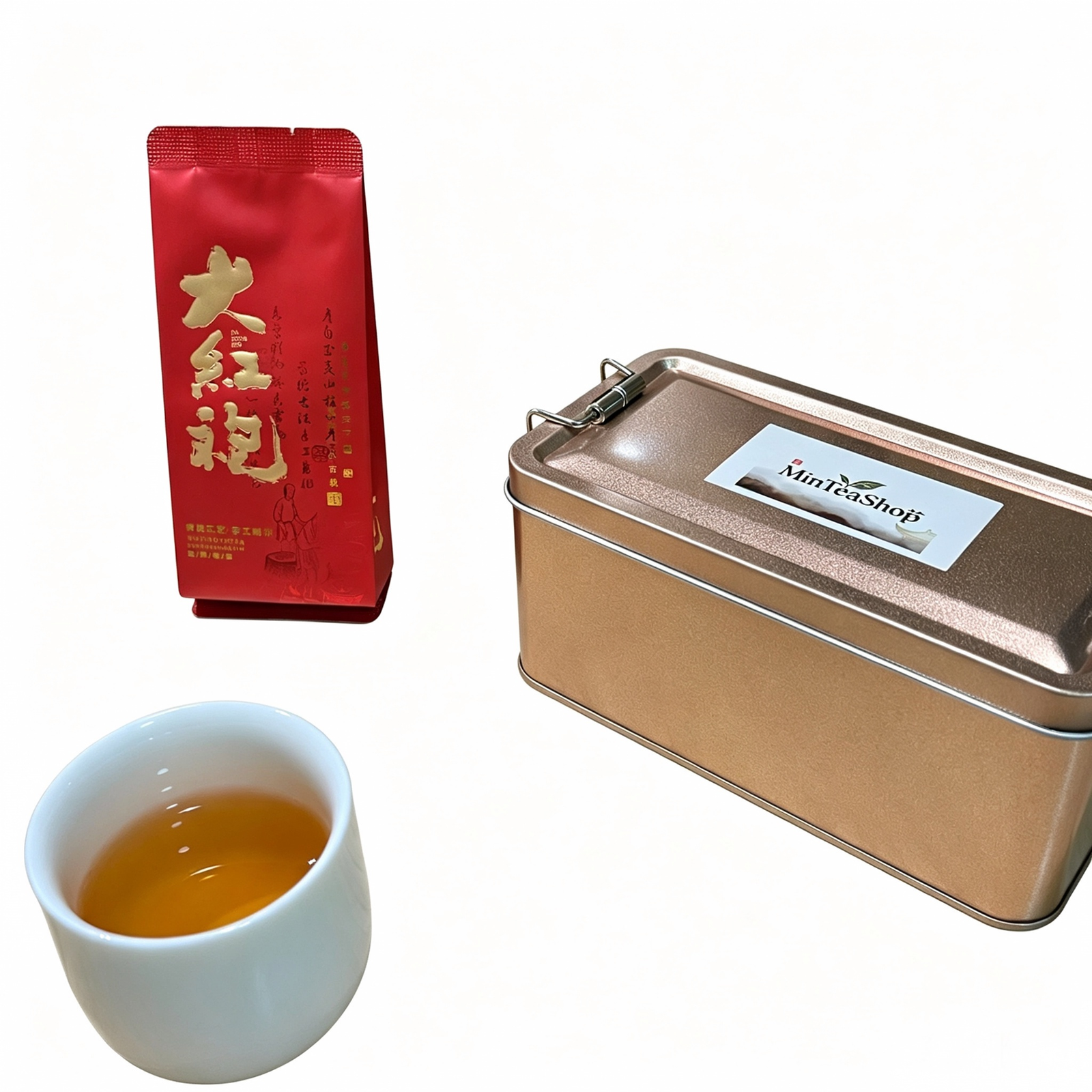
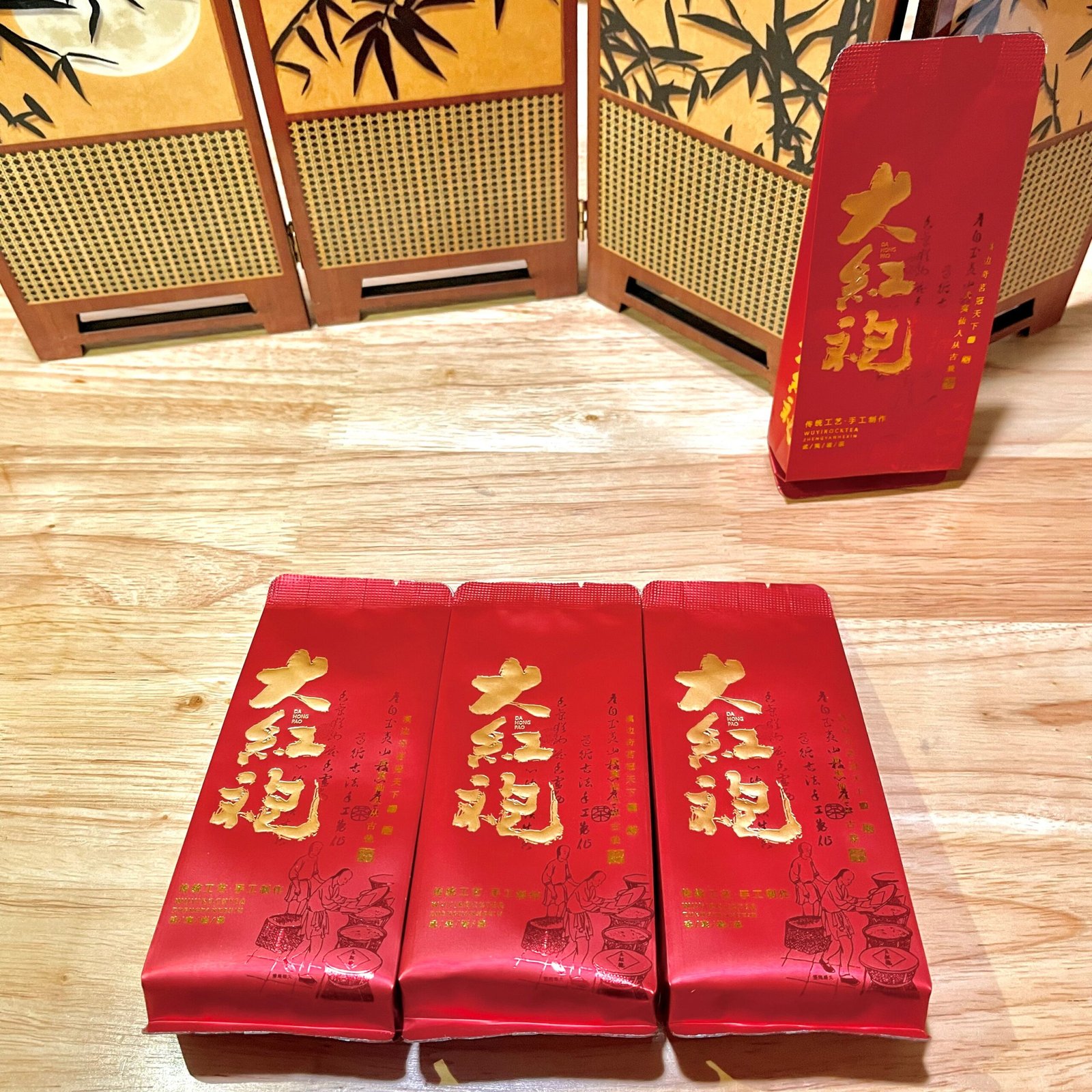
Authentic High Mountain Da hong pao Wuyi Oolong – 2026 Premium Roast
Price range: $9.90 through $106.90
Specifications at a Glance
Type: Wuyi High Mountain Da hong pao
Origin: High-Mountain Tea Region, Wuyishan, Fujian Province, China
Harvest: Spring 2026
Altitude: 1,970 ft – 2,620 ft (600 m – 800 m)
Caffeine: Moderate
Sizes:
4 Packs — 1.17 oz (33.2g | 8.3g × 4)
6 Packs — 1.76 oz (49.8g | 8.3g × 6)
18 Packs — 5.27 oz (149.4g | 8.3g × 18)
30 Packs — 8.78 oz (249g | 8.3g × 30)
60 Packs — 17.57 oz (498g | 8.3g × 60)
Whether you’re new to Wuyi Rock Tea or a seasoned oolong enthusiast, exploring new flavor profiles is half the fun. Curious about other varieties? Every order includes a complimentary surprise sample alongside your tea, so you can explore these rich, mineral nuances firsthand.
Description
High Mountain Da Hong Pao Wuyi Oolong | 2026 Charcoal Roast
If you’ve ever tried tea sold as Da Hong Pao and felt the flavor fell short, you’re not alone.
The reason is simple: origin is everything.
True Wuyi Da Hong Pao gets its iconic flavor from the unique terroir of the Wuyi Mountains. However, teas from other regions are often processed in a similar style and sold under the same name, leaving buyers guessing what they’re actually drinking.
With MinteaShop, you don’t have to take origin on faith.
We own our tea gardens and processing facility in the heart of the Wuyi Mountains, managing quality from leaf to cup. By skipping flashy packaging and excess cost, we focus entirely on what matters most: the quality of the tea inside.
The first is cheap commodity tea that tastes like campfire water. The second is the $300 collector tin from the Zhengyan core zone — gorgeous, but a tough sell for your Tuesday morning.
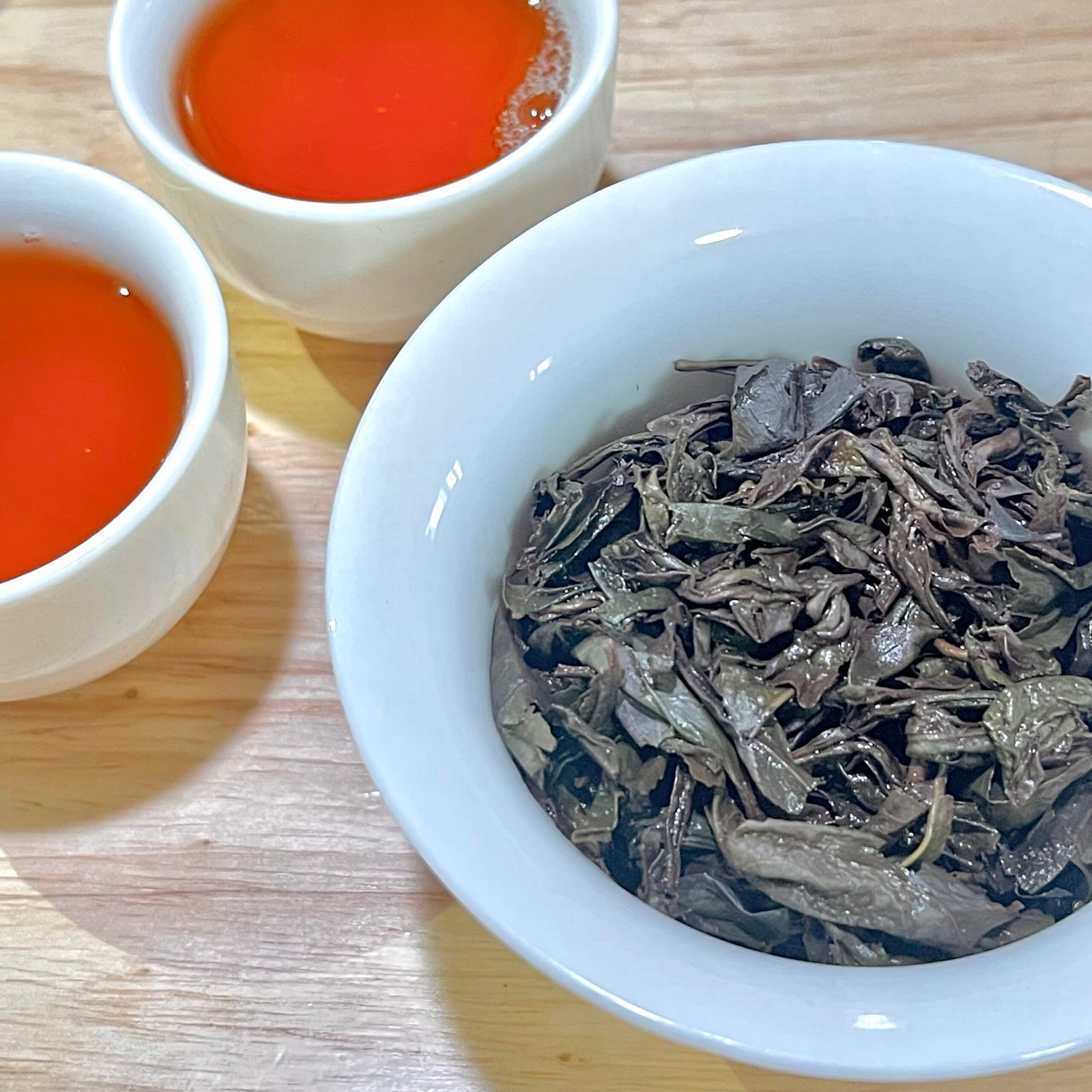
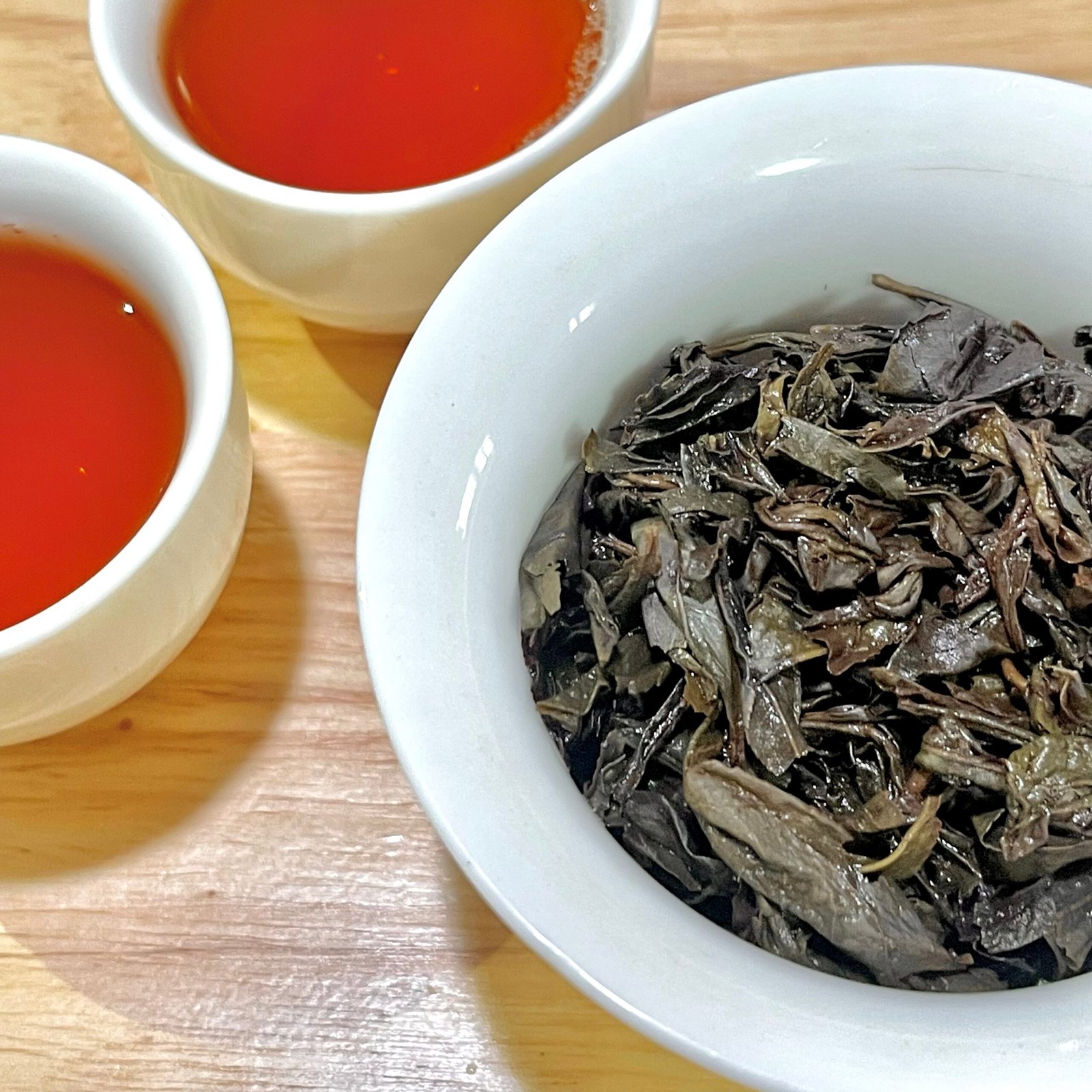
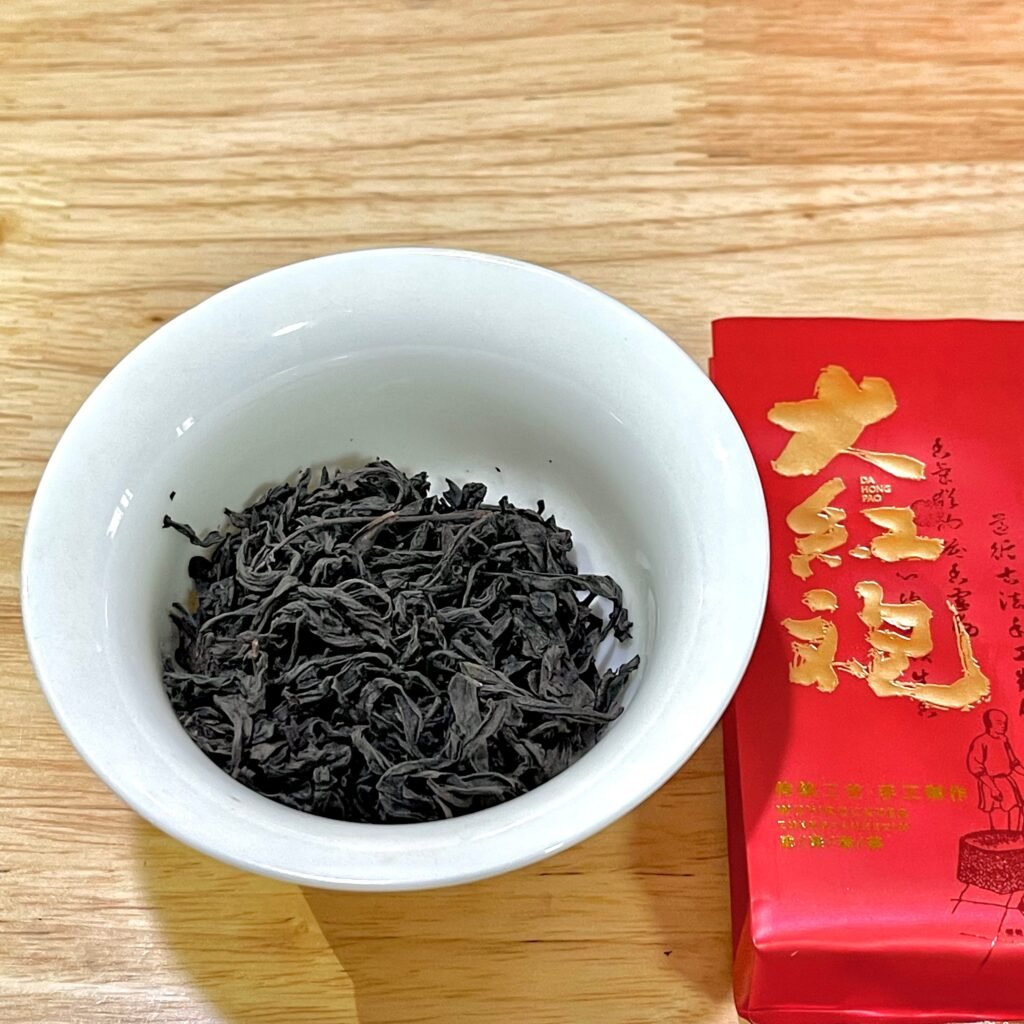
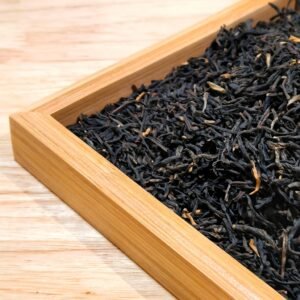
This 2026 spring high mountain Da hong pao Wuyi Oolong sits in the middle. We sourced it from 600–800 m tea gardens on the misty slopes just outside Wuyishan National Park, then put it through three rounds of traditional charcoal roasting. The cup runs charred-orchid on the nose, sweet dried-fruit in the middle, and a clean rocky mineral finish. No bitter bite.
Below I’ll walk you through the origin, the roasting process, why elevation matters, how to brew it gongfu style at home, and how it stacks up against the priciest core-zone stuff. If you’ve ever wondered whether an everyday Yancha can scratch the boutique itch, keep reading.
What Is High Mountain Da Hong Pao (DHP) Wuyi Oolong?
Dahongpao — literally “Big Red Robe” — is the most famous cultivar family in the Wuyi rock tea (Yancha) category. The leaves come from Camellia sinensis var. sinensis shrubs grown in the rocky, mineral-rich cliffs of northern Fujian.
“High mountain” simply means the garden sits between 600 m and 800 m elevation, outside the protected core zone (Zhengyan) but still inside the broader Wuyishan terroir belt. Our 2026 batch came from a co-op of 14 family farms in the Tianyou and Dongjie areas.
The defining flavor is what tea drinkers call Yan Yun (岩韵) — “rock charm.” It is not one specific note but a layered sensation:
- A faint mineral coolness in the back of the throat
- A roasted depth that reminds you of toasted grain or charred pine
- A long, sweet finish that lingers 20–30 seconds after swallowing
If you’ve only tried Taiwanese oolong before, Yancha will taste heavier and more savory. If you’re coming from green tea, expect something between a black tea and a hojicha — but cleaner.
How Is Traditional Charcoal Roasted Yancha Made?
This is where most cheap Dahongpao cuts corners, and it’s also where the flavor lives.
After the spring leaves are picked and withered, they go through:
- Sun withering (晒青) — 20–40 minutes on bamboo trays to soften the leaf cell walls.
- Tossing / bruising (摇青) — 4–6 rounds in a rotating bamboo drum to start controlled oxidation at the leaf edges.
- Fixation / kill-green (杀青) — pan-fried at 200°C to halt oxidation.
- Rolling (揉捻) — shaped into the signature tight twisted strips.
- Charcoal roasting (炭焙) — the critical step.
For our high mountain batch, the roaster — a third-generation tea master in Xingcun village — runs three rounds of charcoal roasting over 36 hours total:
| Roast Round | Temperature | Duration | Purpose |
|---|---|---|---|
| First (低温初焙) | 90–110°C | 12 hours | Locks in the base roast, drives out residual moisture |
| Second (中温复焙) | 120–140°C | 14 hours | Builds the charred-orchid aroma |
| Third (足火) | 100–115°C | 10 hours | Smooths harshness, locks in longevity |
Most mass-market Yancha skips the second and third rounds and uses electric ovens instead. The result tastes flatter and goes stale in 6 months. Our three-round charcoal method is the same lineage used for high-end Zhengyan teas — just done at a smaller scale and lower cost.
Why Does Elevation Matter for Wuyi Rock Tea?
Elevation changes three things that affect the cup: temperature swing, fog cover, and soil drainage.
The Wuyishan mountains sit in a subtropical monsoon zone. Between 600 m and 800 m, you get:
- Cooler nights (10–15°C difference from the valley floor) — slows leaf growth, builds more amino acids and aromatic oils
- Daily mist cover (4–6 hours) — diffuses sunlight, prevents the bitter compounds that form under harsh UV
- Sandy, rocky subsoil (丹霞地貌) — forces roots deep, pulling up minerals like magnesium and zinc that show up as the Yan Yun mineral note
The protected Zhengyan core zone sits inside Wuyishan National Park between 200 m and 400 m along the Jiuqu River. Its teas are legendary because the cliffs and river create a unique microclimate — but the supply is tiny, and the price reflects that.
Our 600–800 m high mountain gardens sit just outside the park boundary. Same mountain range, same Danxia geology, same mist — just higher up the slope and on a larger growing scale. Cup-for-cup, you trade maybe 15% of the Zhengyan intensity for roughly 90% of the price savings.
| Factor | Zhengyan Core Zone | High Mountain (600-800m) | Lowland Commodity |
|---|---|---|---|
| Elevation | 200–400 m | 600–800 m | <300 m |
| Soil | Rocky Danxia cliffs | Rocky Danxia slopes | Alluvial valley |
| Price (50g) | 200–200–500+ | 20–20–40 | 5–5–12 |
| Yan Yun intensity | ★★★★★ | ★★★★ | ★★ |
| Roast depth potential | Deep | Deep | Limited |
How Do You Brew Da hong pao Gongfu Style at Home?
You do not need a 200Yixingpot.A200 Yixing pot. A 15 porcelain gaiwan and a kettle that boils water will get you 90% of the way.
Here’s the setup our tea master uses:
- Leaves: 8.3 g per 100 ml vessel (roughly one full single-serve pouch)
- Water: Full rolling boil, 100°C / 212°F — yes, even though the leaves are partly oxidized, the roast needs the heat
- Ratio: Aim for a 1:12 leaf-to-water weight ratio
Step-by-Step Gongfu Method:
Warm up. Preheat your gaiwan and tasting cups with 212°F (100°C) boiling water. Discard the water.
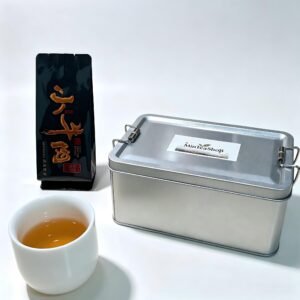
Add tea. Drop in one pre-portioned 8.3g sachet.
Rinse (Flash Rinse). Pour boiling water to the rim and decant immediately—do not steep. Discard the rinse to awaken the leaves.
First 4 Steeps (Flash Infusions). Refill to the rim and decant immediately for steeps 1 through 4. High-grade Zhengyan leaves release rich flavor instantly without needing rest time.
Build (5th Steep Onward). Starting from the 5th steep, add 5–10 seconds to each subsequent steep to draw out the deeper mineral notes.
Stop. When the tea liquor turns pale golden yellow and the cinnamon aroma flattens.
A 50 g pouch gives you roughly 8–10 full sessions, or 60–80 individual cups. Per cup, that’s around $0.30 — less than a vending machine coffee.
Common mistakes to avoid
- Water too cool. Anything under 95°C and the roast sits flat. Boil it.
- Steeping too long on round one. You’ll extract char and miss the orchid. Keep it to 5 seconds.
- Storing the open pouch in the fridge. Humidity + odors = stale tea in two weeks. Keep it sealed in a cool, dark cabinet.
What Foods Pair Best with Wuyi Oolong?
The roast in Yancha makes it a natural match for savory, fatty, slightly sweet foods. The mineral finish cuts through richness without overwhelming delicate flavors.
Here are pairings our team has actually tested over the past year:
- Roasted or smoked meats — char siu pork, smoked duck, grilled lamb chops. The tea echoes the roast without doubling up.
- Hard aged cheeses — aged Gouda, Comté, Manchego. The mineral note mirrors the tyrosine crystals.
- Dark chocolate (70%+) — the roasted depth matches the cocoa, and the tea cleans the palate between bites.
- Spicy Sichuan and Hunan dishes — the rock mineral cools the chili burn without killing it.
- Dim sum, especially char siu bao and roasted goose — the classic Cantonese pairing for a reason.
- Roasted nuts and dried fruit — almonds, hazelnuts, dried apricot, figs. A simple desk-snack pairing.
Skip: delicate raw fish, light green teas with the meal, anything heavily citrus. The roast will fight those flavors.
High Mountain vs Core Zhengyan: Honest Comparison
If you’re choosing between this high mountain Dahongpao and a $250 Zhengyan tin, here is what we tell our own customers:
| Dimension | Our High Mountain DHP | Core Zhengyan DHP |
|---|---|---|
| Garden location | 600–800 m, outside park | 200–400 m, inside park |
| Roast rounds | 3 charcoal rounds | 3–5 charcoal rounds |
| Roast depth | Medium-deep | Deep–very deep |
| Orchid aroma | Clear | Stronger, layered |
| Yan Yun mineral note | Present, clean | More pronounced |
| Sweetness (回甘) | Quick, lasting 20+ sec | Slower onset, longer tail |
| Re-steep count (gongfu) | 8–10 sessions | 10–15 sessions |
| 50 g price | $24 | 200–200–500+ |
| Best for | Daily drinking, gifting, learning Yancha | Collectors, special occasions |
Honest take from our cupping table: the Zhengyan version wins on depth and complexity, especially on steeps 6+. But for everyday brewing — and for most people new to Yancha — the high mountain version delivers the same essential rock charm at a price you can actually brew every day.
Frequently Asked Questions
Is this Da hong pao beginner-friendly?
Yes. The medium-roast level is forgiving — even a 5-second flash steep at 100°C gives you a clean, sweet cup with no bitter bite. If you’ve only done Western-style steeping before, just shorten your steep time and use more leaf.
How many times can I re-steep this Wuyi oolong?
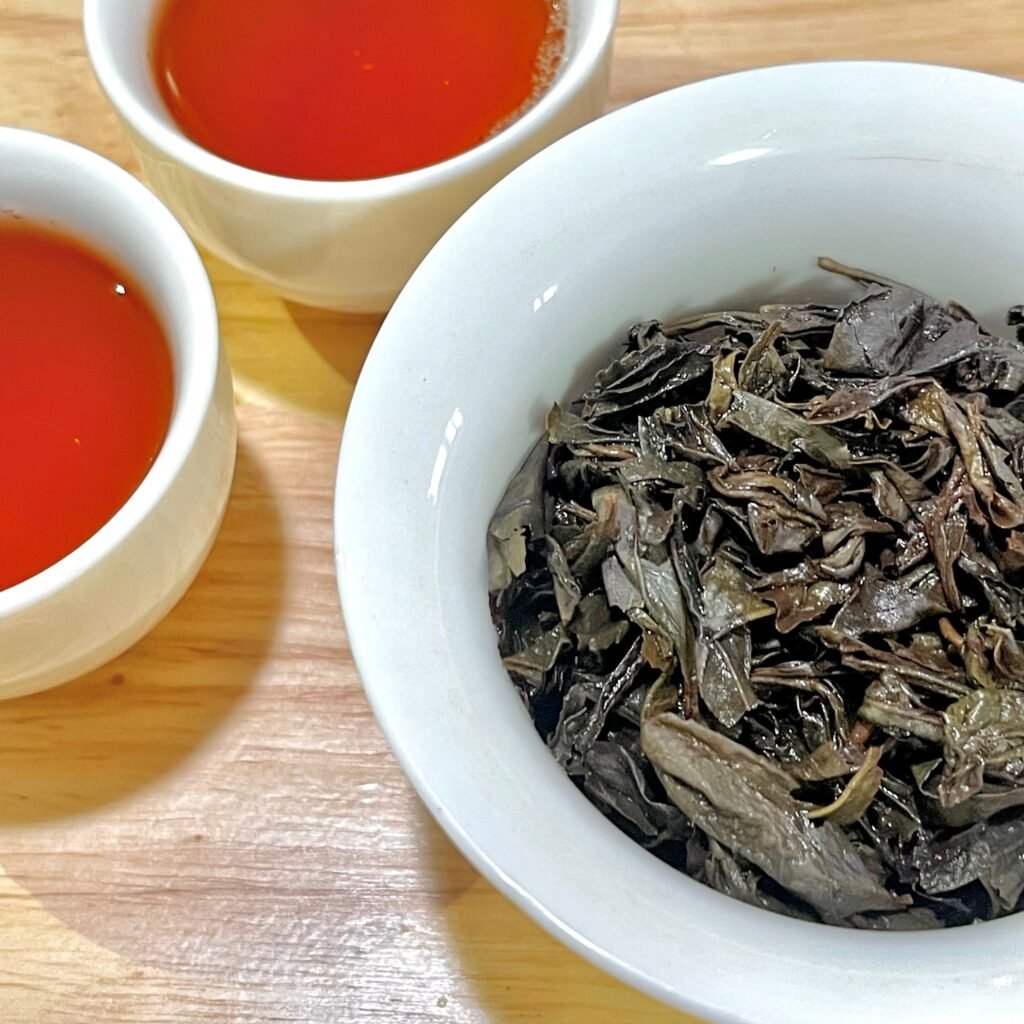
With gongfu parameters, 50 g of leaves yields 8–10 full sessions (roughly 60–80 individual cups). The flavor shifts across steeps: smoke and roast upfront, then orchid and dried fruit, then pure mineral Yan Yun in the late rounds.
Does Dahongpao have caffeine?
Yes. A typical gongfu session delivers roughly 40–60 mg of caffeine — about half a brewed coffee. Most drinkers report a steady, calm lift without the jitters. Avoid brewing late at night if you’re caffeine-sensitive.
How should I store opened Da hong pao?
Keep the sealed pouch away from sunlight, moisture, and strong odors (coffee, spices, curry). Do not refrigerate. Properly stored, this Wuyi Yancha stays fresh for 18–24 months — the charcoal roast actually helps preserve it longer than green oolongs.
Is this the same as the original mother Da hong pao trees?
No. The original mother bushes on Tianjing Rock no longer produce commercial tea — they’re a protected heritage site. All commercial Dahongpao today, including ours, is grown from cuttings of the original cultivar line. Our version uses Bei Dou Que and Shui Xian cuttings, which carry the same genetic family.
A Final Note
Whether you’re a seasoned tea drinker or just starting out, every order includes a free bonus: a sample of our everyday Wuyi Tea, alongside an extra variety sample to explore.
Pure, clean, and delicious, this is our go-to for daily sipping. But why include it?
For Experienced Tea Lovers: You might quickly realize that what other vendors market as “premium” is simply our everyday baseline. We cut the markup—never the quality.
For Beginners: It gives you a reliable reference point. Tasting it side-by-side with your main order lets you instantly recognize authentic Wuyi Rock Tea notes, so you’ll never overpay again.
If you’d like to try other authentic styles, explore our Wuyi Rock Tea Collection.
Additional information
| size | 4 Packs (1.17 oz), 6 Packs (1.76 oz), 18 Packs (5.27 oz), 30 Packs (8.78 oz), 60 Packs (17.57 oz) |
|---|
Related products
-

Wuyi Oolong Tea: Best 78-Year Old Tree Wu San Di 2026
Price range: $18.90 through $249.90Select options This product has multiple variants. The options may be chosen on the product page -
Jin Jun Mei | 100% Authentic Black Tea | Honey-Sweet Aroma
Price range: $9.90 through $46.90Select options This product has multiple variants. The options may be chosen on the product page -
Wuyi Rock Oolong Tea Guide: Authentic Xiao Niu Rou Rougui 2026
Price range: $12.90 through $189.90Select options This product has multiple variants. The options may be chosen on the product page -
Wuyi Rock Tea: Authentic Zhengyan Rougui (Yixiantian 2026)
Price range: $10.90 through $149.90Select options This product has multiple variants. The options may be chosen on the product page
Reviews
There are no reviews yet.