
White Tea Types Compared: Which Should You Choose?
If you’ve ever stood in a tea shop staring at 30 different packages, all labeled things like “Silver Needle,” “White Peony,” “Gongmei,” “Shoumei,” wondering which one to take home — this guide is for you.
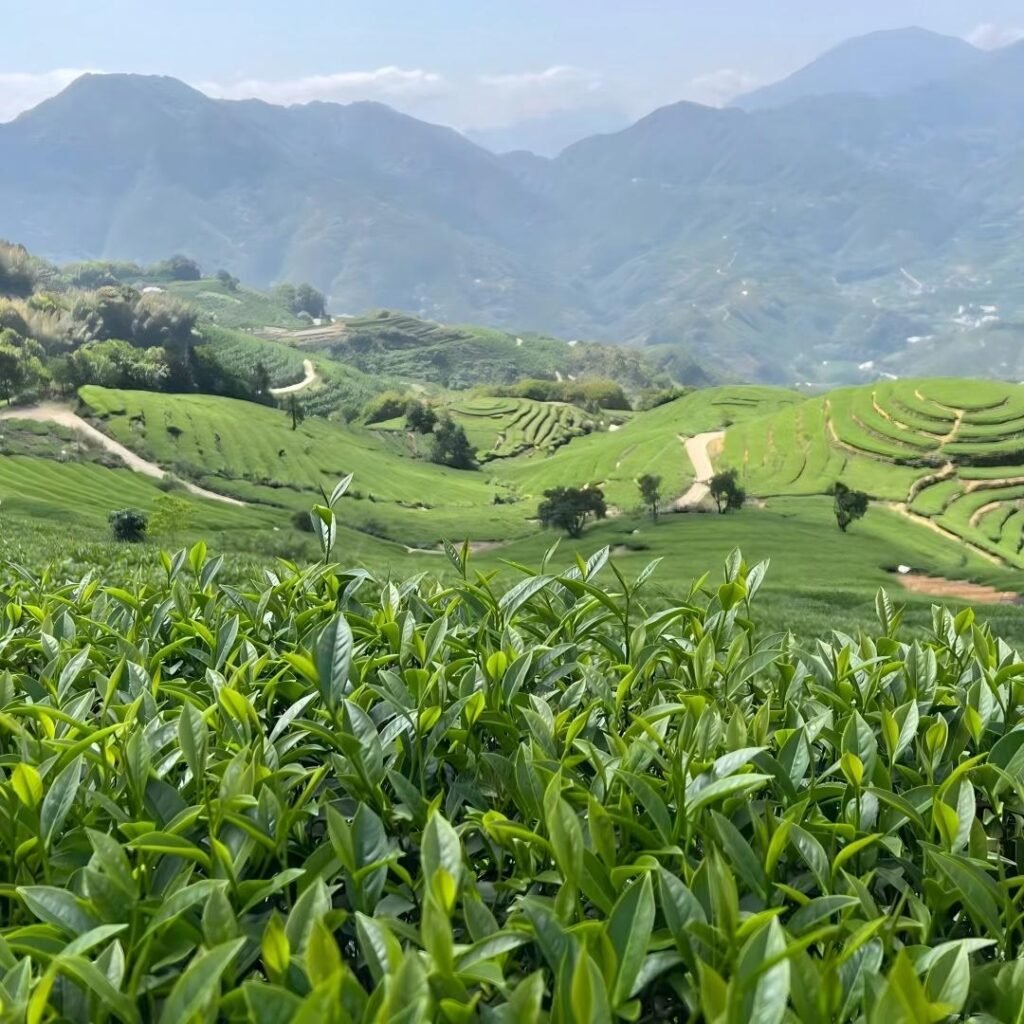
You’re in the right place. We’re Minteashop, a small white tea house in Fuzhou, Fujian — the birthplace of Chinese white tea — and we source from the high mountains of Shouning County, about 4 hours north into the mountains.
Want to skip the reading?
If you just want to taste the four types side by side, we’ve curated a small white tea collection with one of each. Otherwise, let’s start at the beginning.
New to white tea altogether? Start with our beginner’s roadmap for drinking white tea, then come back here to choose a type.
What Is Chinese White Tea, Exactly?
The short version: White tea is the least-processed major tea category in China. The leaves are picked, withered, and dried — that’s it. No rolling, no fermentation, no pan-firing. The result is a tea that tastes closer to the fresh leaf than almost anything else you’ll drink.
The slightly longer version: Most of the “white tea” you’ve seen online — light, golden, sweet — is made from leaf buds or young leaves of the Camellia sinensis plant, processed with the absolute minimum of intervention. The leaves aren’t rolled into tight balls (like green tea) or bruised to start oxidation (like oolong). They go from bush to withering rack to drying rack, with the most important work happening in the still air between those two steps.
Most white tea grown in Fujian comes from one of three plant types:
- Da Bai (大白, “Big White”) — large, plump buds. Used for Silver Needle and high-grade White Peony.
- Xiao Bai (小白, “Small White”) — smaller buds, more delicate leaves. Used for White Peony, Gongmei.
- Cai Cha (菜茶, “Vegetable Bush”) — a closer-to-wild, heirloom bush with smaller leaves and more flavor complexity. Used mainly for Gongmei, traditionally.
You don’t need to memorize these names. We’re mentioning them so that when you see them on a label or on a product page, you’ll know they’re just plant types, not some secret processing step.
The 4 Types at a Glance
| Type | Leaf Material | Flavor in Short | Caffeine | Best For |
|---|---|---|---|---|
| Silver Needle (Bai Hao Yin Zhen, 白毫银针) | Single buds only | Delicate, sweet, fresh | Low | Quiet cups, gifts, slow afternoons |
| White Peony (Bai Mu Dan, 白牡丹) | 1 bud + 1–2 young leaves | Floral, fuller-bodied, more depth | Medium | Daily drinking, exploring flavor |
| Gongmei (贡眉) | 1 bud + 2–3 mature leaves | Mellow, honeyed, gentle | Medium | Daily drinking, value seekers |
| Shoumei (寿眉) | 1 bud + 3–4 mature leaves | Mellow young; honeyed and complex when aged | Medium | Aging, everyday gongfu, value seekers |
Why this table matters: Most guides put Silver Needle at the top and Shoumei at the bottom — as if one is “better” and the other is “worse.” We don’t agree. Each of these is a different kind of tea, not a step on a ladder.
Meet the 4 Types
Silver Needle (Bai Hao Yin Zhen)
If Silver Needle were a person, it would be the friend who shows up in a perfectly worn linen shirt and never raises their voice.
What it tastes like: Delicate, sweet, with a fresh aroma tea drinkers call hao xiang (毫香) — the smell of the silvery down on each bud. There’s almost no bitterness, and a clean, lingering finish that many find subtly floral.
Quick grade note: Real Silver Needle should be entirely buds — no stems, no leaves. If you see green or yellow leaves mixed in, you’re looking at a lower-grade version — or, more often, White Peony that’s been mislabeled as Silver Needle.
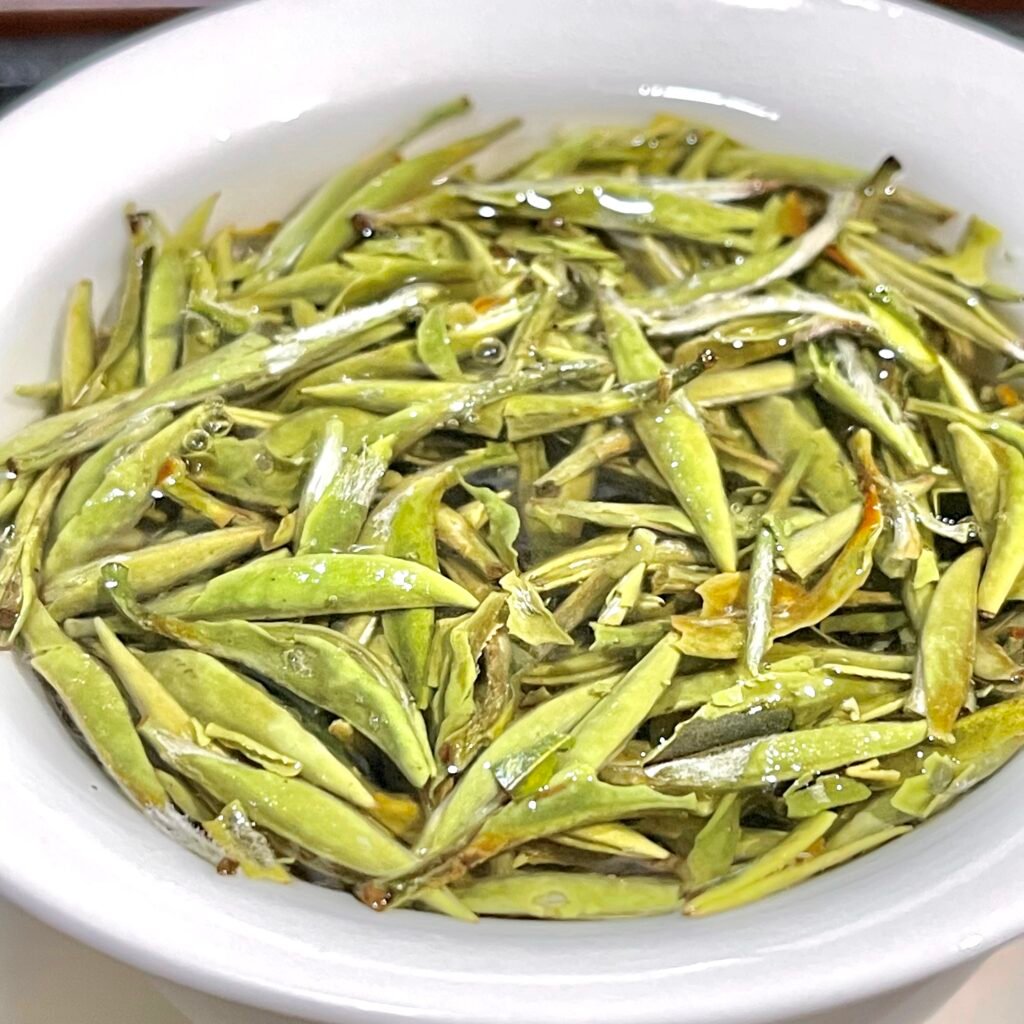
Best for: Quiet cups, gifts, slow afternoons. See our 2026 Silver Needle →
White Peony (Bai Mu Dan)
White Peony is Silver Needle’s more approachable cousin — same family, more personality.
What it tastes like: A bigger, fuller flavor than Silver Needle — more body, more stone-fruit sweetness, and a longer finish. Many first-time white tea drinkers prefer White Peony to Silver Needle, because the flavor is more present, more obvious, and easier to pick out on the palate.
Quick grading note: Lower-grade White Peony is mostly leaves with very few buds — a common shortcut in the trade, but the flavor flattens out fast. Higher-grade White Peony keeps a clear bud-to-leaf ratio (often labeled 1 bud to 1–2 leaves).
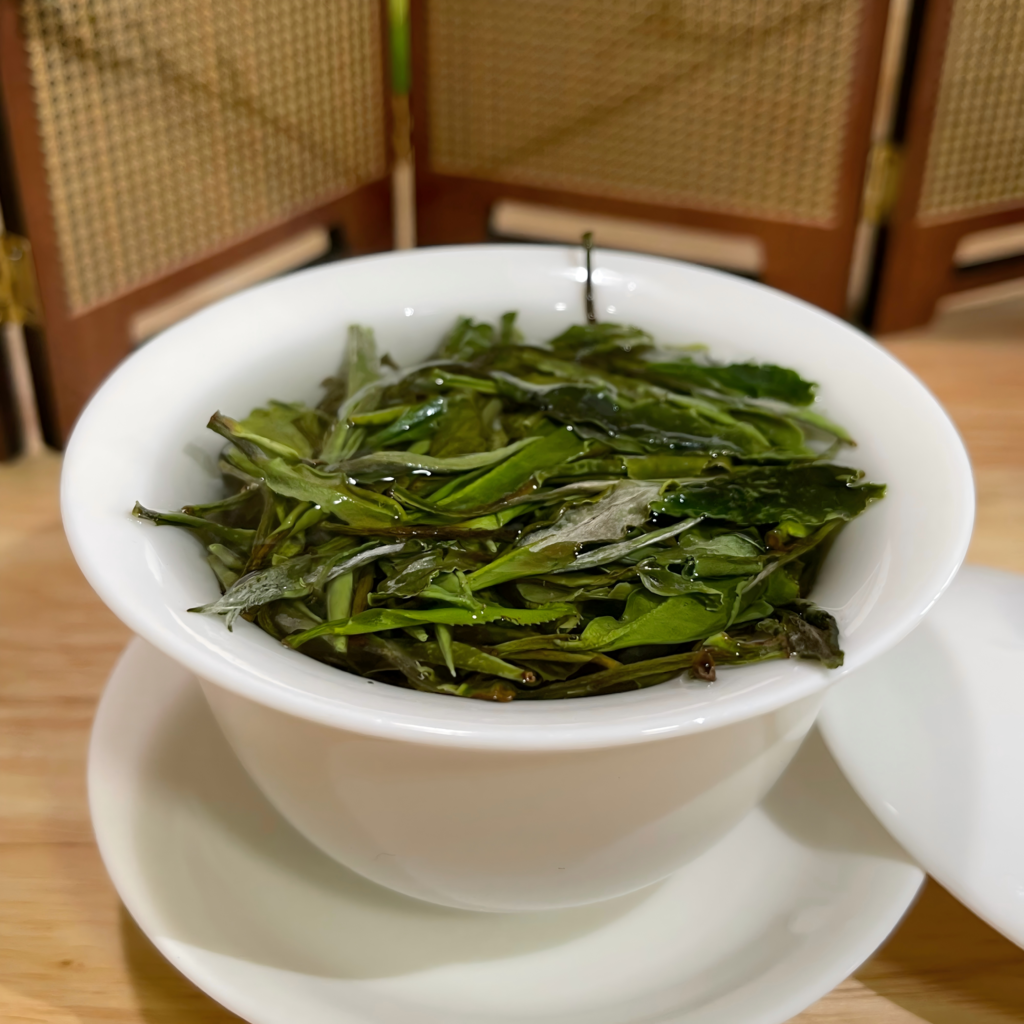
Best for: Daily drinking, exploring flavor, when Silver Needle feels too thin. See our White Peony 2026 →
Gongmei
If Silver Needle is the quiet one and White Peony is the friendly one, Gongmei is the under-the-radar one.
What it tastes like: Mellow, rounded, and a little grassy when young. Less complex than White Peony, but smoother and easier to drink. A Gongmei from Shouning’s heirloom Caicha bushes has more depth than most — that’s the main reason to choose Gongmei over Shoumei.
Best for: Daily drinking, value seekers, drinkers who find White Peony too light and Shoumei too heavy.
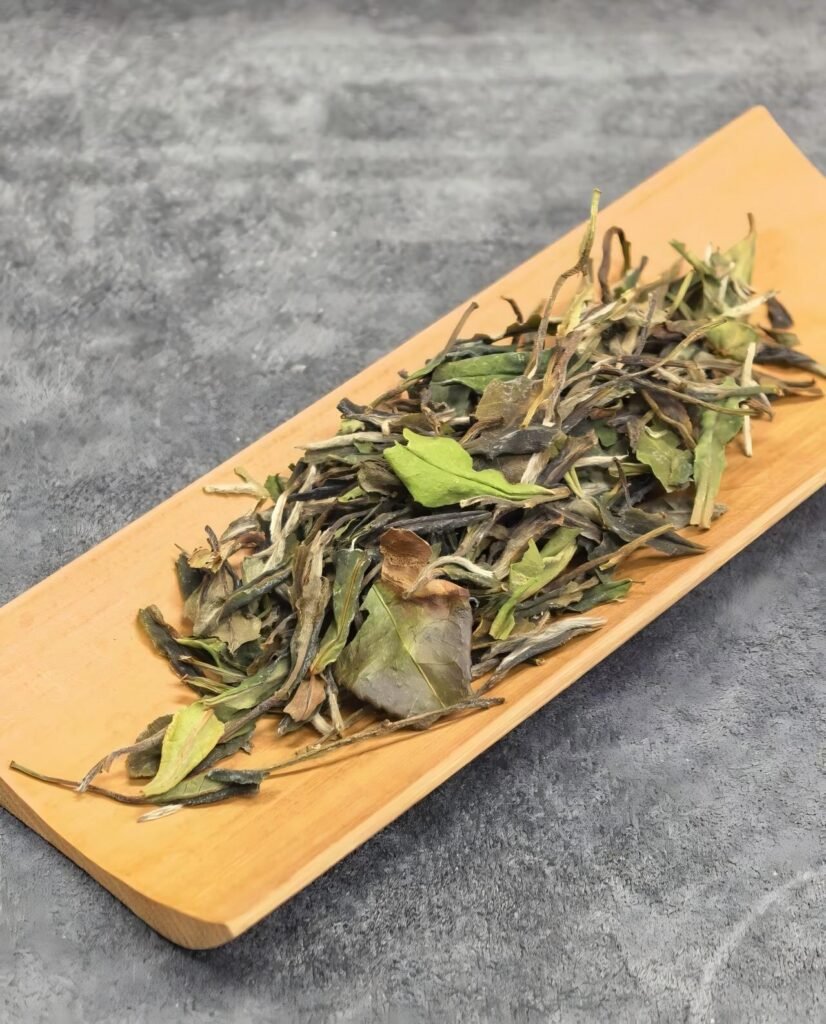
A note on availability: Minteashop doesn’t currently carry Gongmei. We’ve listed it here because it’s one of the four main types — but for our own customers, White Peony and Shoumei (and Silver Needle for special occasions) cover the same middle ground with a little more personality.
Shoumei
Shoumei is the white tea you’ll see most often in aged cakes and tea markets in southern China. It’s the everyday workhorse — and after 5–10 years of patient storage, also one of the most rewarding white teas to drink.
What it tastes like: When young (under 2 years): mellow, slightly hay-like, with a soft sweetness. When aged (3+ years): the flavor deepens — honeyed, dried-fruit notes, sometimes a whisper of dried longan or jujube. A well-aged Shoumei has a thick, almost syrupy texture and a finish that lingers for minutes.
A 10-year Shoumei asks you to sit with it longer. The flavor keeps opening up — like a conversation that gets more interesting the longer you stay.
Quick grade note: Shoumei is graded by picking standard (how much bud vs. leaf) and by harvest season (spring vs. autumn). Spring Shoumei is more expensive; autumn Shoumei is more robust. For aging, choose spring Shoumei. For daily drinking, autumn is fine.
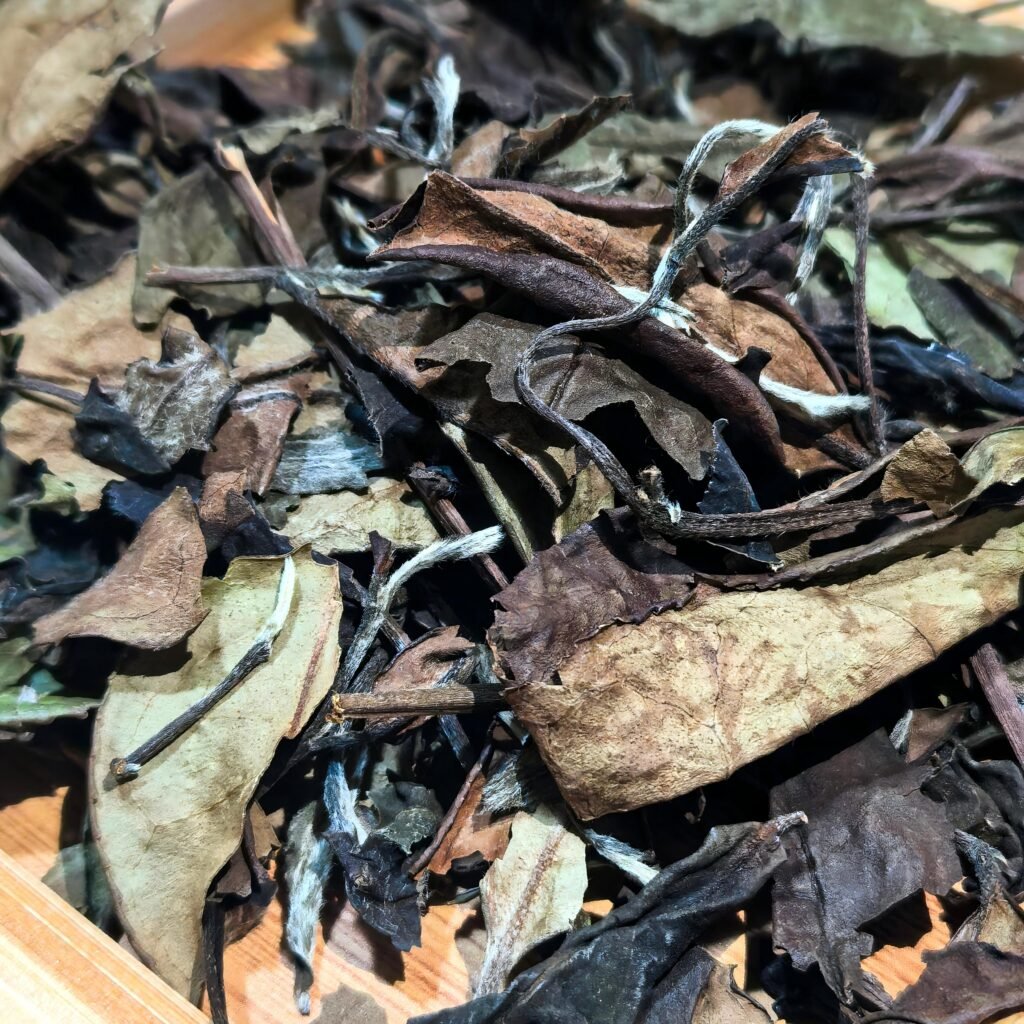
Best for: Aging (3, 5, 10, 20 years — all work), everyday gongfu brewing, value seekers, and tea drinkers who like their tea to have weight. See our Shou Mei | 100% Authentic & Refreshing Premium White Tea
Where Our White Tea Comes From
The short version: Our tea is grown in Shouning County (寿宁), in the mountains about 4 hours north of Fuzhou. It’s a small, misty, quiet county that has been growing white tea for over a thousand years.
The longer version: Most Chinese white tea — including, frankly, most of what you’ll find on Amazon or in your local tea shop — comes from a few big tea gardens in lowland areas, picked mechanically in the spring rush and processed fast to keep costs down. The flavor is fine. It’s just not interesting.
Shouning is the opposite. The tea gardens sit at 700–1,000 meters, often on terraced hillsides too steep for machinery. The picking is done by hand, by older tea farmers — many in their 60s, 70s, even 80s — who have done this work their whole lives. The withering is slow, in open rooms with mountain air, not climate-controlled factories.
We work with a small group of these farmers — families, mostly — and we pay above the local market rate, not because we’re generous, but because we want them to keep doing this work. The tea we sell is the tea we drink at home. It’s from a place we know, made by people we know.

How to Brew White Tea
The basics: Use 3–5 grams of leaf per 150ml of water, water at 80–85°C (175–185°F), and a short rinse isn’t necessary — but a 5-second rinse is fine if you like one. Pour and let it steep for 3–5 minutes for the first infusion.
Re-steep: White tea is one of the most forgiving tea categories — 3 to 5 infusions are normal, and a good Shoumei will give you 7, even 10. Use slightly hotter water (closer to 90°C / 195°F) and longer steeps for the later infusions.
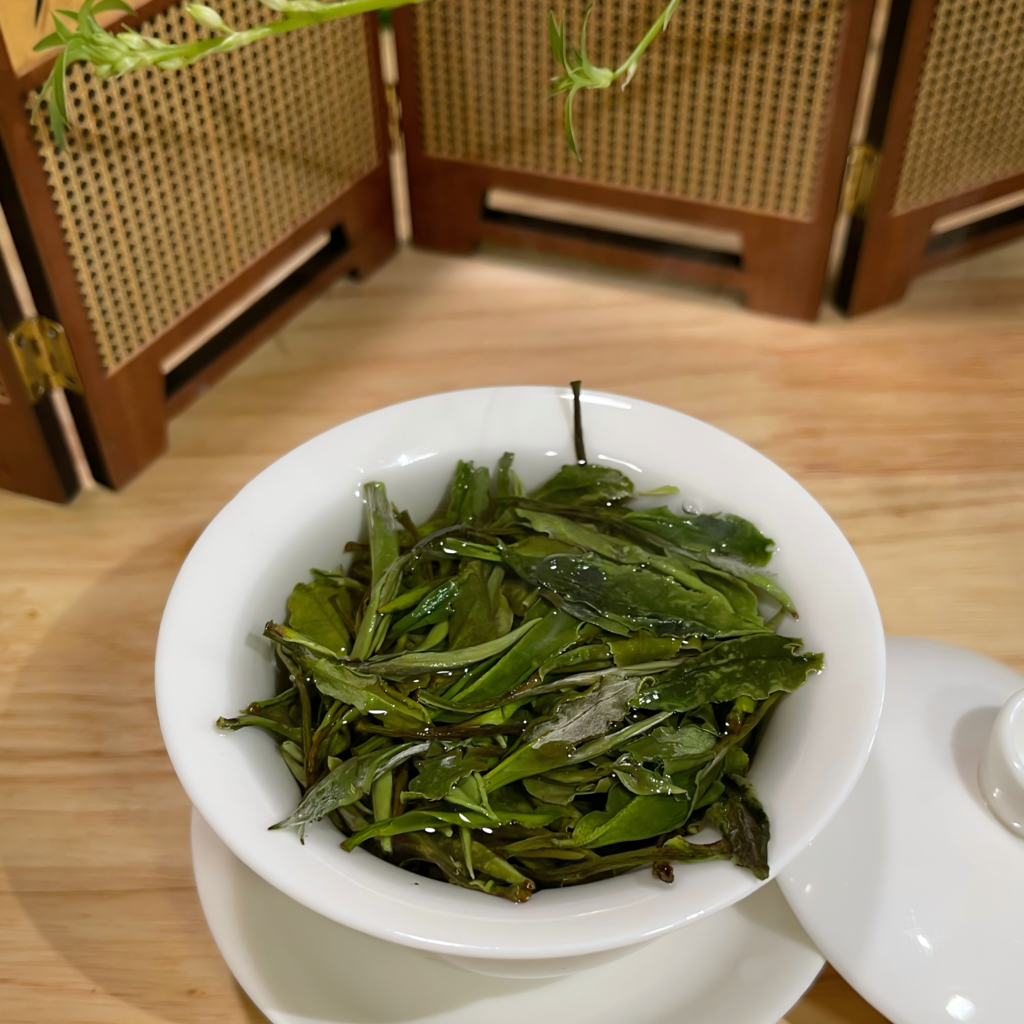
Vessels: A glass cup works beautifully for Silver Needle. A small gaiwan (lidded brewing cup) or a Yixing teapot works well for White Peony, Gongmei, and Shoumei. A simple Western teapot is fine for everything above.
Quick note on gongfu (功夫): “Gongfu” literally means “time and effort.” It refers to a Chinese brewing style using a small pot (often a gaiwan) and short, repeated steeps — usually 10–30 seconds each — to taste how a tea opens up infusion by infusion. It’s the best way to drink a tea you want to get to know, rather than just sip.
How to Choose Your First White Tea
Most people don’t start by choosing a type. They start by choosing a mood.
If you want a clean, simple, almost-watery cup that lets you slow down → start with White Peony.
If you want the finest white tea → go for Silver Needle. It’s expensive and delicate. But a great Silver Needle is the kind of cup that makes you understand what tea can be.
If you want the most flavor for your money, and a tea that gets better with time → start with a Shoumei cake.
If you want a tea you can drink every day without thinking about it → go with Gongmei or Shoumei (loose-leaf, not cake).
One last thing: the “best” white tea is the one you’ll actually drink. A perfectly stored 10-year Shoumei that sits in your cupboard is not better than a fresh White Peony you brew every Sunday morning. The best tea is the one in your cup.
Shop each type
- Silver Needle (Bai Hao Yin Zhen) — 2026 first flush, whole buds — the fine end. Buy a small amount; it is delicate and expensive.
- White Peony (Bai Mu Dan) — spring 2026 loose leaf — the easiest first purchase.
- White Peony cake — 2024 vintage — if you would rather press and age it.
- Shou Mei cake — 2020 vintage — the ageing pick: honey and dried fruit in five years.
- Shou Mei loose leaf — 2025 — the entry-price everyday cup.
A Note on “Healthy White Tea” Claims
The honest version: White tea has real antioxidants. So do green tea, oolong, black tea, and pretty much every other tea made from the Camellia sinensis plant. The “white tea is healthier” claim is mostly marketing — usually built on the fact that white tea is less processed, and the less-processed story sounds more “natural.”
What this means for you: Drink white tea because you like how it tastes, not because someone on TikTok told you it’ll cure inflammation. The benefits are real but modest, and every other true tea has them too.
If you want the highest antioxidant content, choose older teas (Shoumei aged 3+ years has been shown in some studies to be among the highest) and brew them a little stronger.
We share this not to sell you on white tea as a medicine, but to set the right expectation. White tea is food. Good, quiet, slow food. The kind of tea that fits into a life — not a protocol.
Frequently Asked Questions
u003cstrongu003eQ1: What are the 4 main types of Chinese white tea?u003c/strongu003e
A: The four main types of Chinese white tea are u003cstrongu003eSilver Needleu003c/strongu003e (Bai Hao Yin Zhen), u003cstrongu003eWhite Peonyu003c/strongu003e (Bai Mu Dan), u003cstrongu003eGongmeiu003c/strongu003e, and u003cstrongu003eShoumeiu003c/strongu003e. They differ mainly in the leaf material used — from a single bud only (Silver Needle) to a bud with three or four mature leaves (Shoumei).
u003cstrongu003eQ2: Which Chinese white tea is the best for beginners?u003c/strongu003e
A: For beginners, u003cstrongu003eGongmei or Shoumeiu003c/strongu003e are the best choices. Both are gentle, sweet, affordable, and very forgiving to brew. Once you’re comfortable with them, you can move up to White Peony for more complexity or Silver Needle for the most refined cup.
u003cstrongu003eQ3: What does Silver Needle white tea taste like?u003c/strongu003e
A: Silver Needle has a delicate, sweet flavor with a fresh aroma tea drinkers call u003cemu003ehao xiangu003c/emu003e (毫香) — the smell of the silvery down on each bud. There’s almost no bitterness, and a clean, lingering finish that many find subtly floral.
u003cstrongu003eQ4: Can Shoumei white tea be aged like pu’er tea?u003c/strongu003e
A: Yes. Shoumei is the most common white tea to age. A 3-year Shoumei tastes honeyed; a 5-year Shoumei develops notes of dried jujube; a 10-year Shoumei tastes like dried fruit, herbs, and old wood. Properly stored in a cool, dry, dark place, it can age beautifully for 15–20 years.
u003cstrongu003eQ5: What’s the difference between White Peony and Shoumei?u003c/strongu003e
A: White Peony uses u003cstrongu003eone bud with 1–2 tender young leavesu003c/strongu003e, while Shoumei uses u003cstrongu003eone bud with 3–4 mature leavesu003c/strongu003e. White Peony tastes more floral and complex; Shoumei tastes mellow and is more commonly aged. Both are excellent for daily drinking.
u003cstrongu003eQ6: What water temperature is best for brewing white tea?u003c/strongu003e
A: Use u003cstrongu003e80–85°C (175–185°F)u003c/strongu003e water — well below boiling. White tea is delicate; boiling water can scald the leaves and bring out bitterness. If you don’t have a temperature-controlled kettle, simply let boiling water sit for about 2 minutes before pouring.
Final Words
We’ve covered the 4 types, where our tea comes from, how to brew it, and how to choose. If you’ve read this far, you probably know more about white tea than 95% of the people buying it — and you almost certainly know more than the algorithm that recommended it to you.
The only thing left is to drink one.
The quiet promise: White tea doesn’t shout. It doesn’t promise miracles or energy or transformation. It just tastes good, gets better with attention, and asks for very little. If that sounds like the kind of tea you’d like to drink, we made this guide — and we make our tea — for you.
Related reading: New to white tea benefits? Read What Is White Tea Good For?
A small note on transparency:
This article contains no paid placements, no affiliate links, and no AI-generated images. We mention only the teas we actually carry. Products we don’t currently stock (like Gongmei) are mentioned for educational completeness — we always flag that when we bring them up. We sometimes link to our own products where we genuinely believe they’re a good fit — never as ads. Photos used in this article are taken on location in Shouning County or are product photos from our own stock.

7 Comments